
Buying cup paper sheets in bulk can reduce unit costs, but a low quote does not guarantee a good fit. The right choice depends on how the sheets will be converted, handled, and stored. Before comparing suppliers, define the sheet dimensions, paper weight, coating, and intended cup use. Ask for a sample. Feel its stiffness, check the surface, and see how cleanly it cuts on your equipment. Small details matter.
This guide outlines seven practical checks for making a more informed purchase. It covers material specifications, supplier consistency, order quantities, pricing, packaging, lead times, and quality documentation. Request written details rather than relying on a brief product description. Confirm whether quoted prices include freight, and ask how damaged or inconsistent batches are handled. A neat price table can still hide important differences. Even experienced buyers can overlook storage conditions; damp cartons may affect paper quality before production begins. That takes time to fix.
No single specification suits every cup or production line. Compare samples under realistic conditions, and keep a record of the results. If a supplier cannot clearly explain a product’s stated properties, pause before committing to a large order. These tips are a starting point, not a substitute for testing your own requirements. Bulk purchasing rewards careful checks, though it rarely removes every uncertainty.
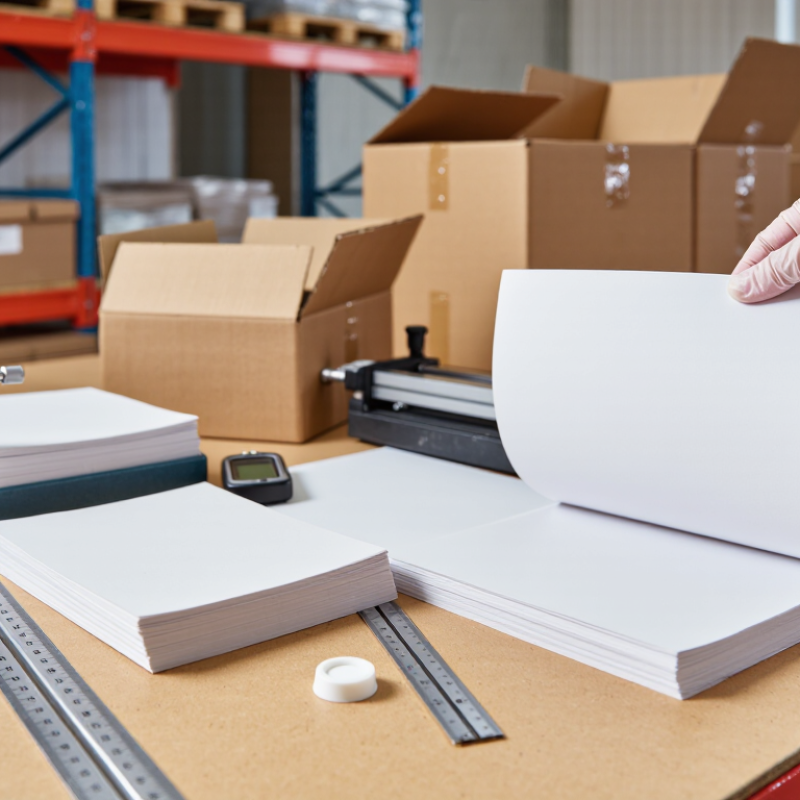
Before comparing prices, define the cup you need to make. List its finished capacity, rim diameter, intended beverage temperature, and forming-machine requirements. Then specify sheet thickness or basis weight, coating type, and whether the sheet must resist hot liquids, grease, or condensation. A small mismatch can cause poor sealing or awkward forming. Check samples on your own line.
Tip: Ask suppliers for food-contact documentation and clear coating details. Paper cup sheets may use different barrier materials, so do not assume two sheets with the same weight will perform alike. The American Forest & Paper Association estimated the 2023 U.S. paper and paperboard recovery rate at 65–69%. That figure covers a broad material category, not cup sheets specifically; it cannot confirm that a coated sheet is recyclable in your local system.
Tip: Request a trial quantity before placing a bulk order. Test for leaks, seam strength, and forming consistency at your usual production speed. Record the sheet lot and settings. Even a careful specification can miss a problem that appears only after the sheets run warm or sit in storage. I’d leave room for that possibility.
When buying cup paper sheets in bulk, compare basis weight, stiffness, and thickness rather than choosing by weight alone. A heavier sheet may feel sturdy, yet still perform poorly if its fibers buckle around a tight cup seam. Ask for samples in the exact size and grade you plan to order. Check how they fold, cut, and hold their shape. Small differences matter.
Coatings must suit the drink and converting process. PE coatings resist moisture well, while aqueous or compostable coatings may fit different product goals, but performance depends on the full specification. Test sheets with hot water, cold drinks, and the intended sealing method. Watch for leaks at edges. Also check whether the coating affects print quality or storage needs. These tests take time, and that can be annoying.
Food safety deserves equal attention. Request current food-contact declarations and relevant test reports for the paper, coating, inks, and adhesives. Requirements vary by sales region, so verify documents against the rules that apply to your market. Confirm batch traceability and ask how the supplier handles material changes. Keep a retained sample from each delivery. Paper can vary slightly between batches; I would not assume one successful trial guarantees identical results later.
These are reference points for comparing sheet basis weight, not standardized cup-paper grades or buying recommendations. Tooltips show the approximate equivalent in pounds per 500 sheets based on a 25 × 38 inch sheet size. Basis weight alone does not determine stiffness, coating performance, or food-contact compliance; confirm the intended use and request supporting documentation. In the U.S., relevant paper-and-paperboard provisions include FDA 21 CFR 176.170 for certain aqueous and fatty foods and 21 CFR 176.180 for dry foods.
When buying cup paper sheets in bulk, confirm the finished blank dimensions—not just the sheet size. Ask for length, width, caliper, and cutting tolerance, then compare them with your cup-forming machine’s specifications. A few millimeters can affect feeding or leave an uneven seam. Small gaps matter. If you have a current production blank, measure several pieces rather than relying on one sample; cuts can vary slightly across a stack.
Compatibility involves more than dimensions. Check whether the paper’s stiffness, coating, and grain direction suit your forming process and intended beverage use. Ask the supplier for technical data and a trial quantity, then run sheets through your machine at normal speed. Watch for curling, jams, poor sealing, or ink transfer. Test before scaling. A sheet that works by hand may behave differently during a long production run, and that is an easy assumption to get wrong.
Customization should be checked against the actual blank layout. Request a dieline showing trim edges, seam areas, and any print-safe zones before approving artwork. Confirm color and registration on a physical proof, especially for small text near curved edges. Also clarify whether changes to dimensions, coating, or print require a new setup or minimum order. Keep an approved sample and written specifications for repeat orders; memory is not a dependable production record.
When comparing bulk quotes, calculate the cost per usable sheet, not just the carton price. Include setup fees, pallet charges, and price breaks tied to larger orders. Estimate monthly use from production records, rather than one unusually busy week. A low unit price can still leave cash tied up for months. Check sheet dimensions and material specifications against your equipment; small mismatches may create waste.
Storage changes the math. Measure clear, dry floor space, including room for carts and safe access to each pallet. Keep sheets away from damp walls, direct sunlight, and sharp temperature swings. Ask how cartons should be stacked, and order only what your storage area can protect. A “temporary” pallet can block a working aisle longer than expected. Easy to overlook.
Give delivery costs their own line. Confirm freight, unloading equipment, appointment fees, and whether the truck reaches your receiving door or only the curb. A lower quote may require a full truckload, while smaller deliveries can cost more per sheet. Compare the landed cost for each order size against your usage and storage limits. Add a modest buffer for delays, then review it after tracking real lead times. Forecasts still miss things.
| Tip | What to Check | Planning Example | Cost, Storage, or Delivery Impact |
|---|---|---|---|
| 1. Confirm the sheet specification | Agree on sheet dimensions, paper weight, coating, and tolerances before comparing offers. | Example specification: 500 × 700 mm sheet at 250 gsm. The sheet area is 0.35 m² and the paper weighs about 87.5 g per sheet. | A consistent specification makes unit-price comparisons meaningful. Different sizes or weights change both material use and shipment weight. |
| 2. Compare bulk price tiers | Compare the sheet price and merchandise subtotal at the same specification. | Illustrative pricing: 5,000 sheets at $0.095 each = $475; 10,000 at $0.085 = $850; 20,000 at $0.078 = $1,560. | Lower unit prices may require more cash and storage. Compare the delivered cost, not just the price per sheet. |
| 3. Calculate pallet quantities | Ask how many sheets fit on a pallet and confirm the supplier's safe load and packing method. | For planning, assume 5,000 sheets per pallet: 5,000 sheets = 1 pallet; 10,000 = 2; 20,000 = 4. | At 87.5 g per sheet, the paper weighs about 437.5 kg per 5,000-sheet pallet, excluding pallet and packaging weight. |
| 4. Check storage capacity | Allow room for pallet access, safe handling, and protection from moisture and floor contact. | A 1.2 × 1.0 m pallet has a 1.2 m² footprint. Allowing about 2 m² per pallet for access gives planning space of roughly 2, 4, or 8 m² for 1, 2, or 4 pallets. | Keep sheets wrapped, dry, and off the floor. Confirm stack height and storage conditions with the supplier and warehouse team. |
| 5. Include delivery in the comparison | Request a freight estimate for the delivery address, shipment size, and unloading arrangements. | Illustrative regional freight: $120 for 1 pallet, $190 for 2 pallets, and $320 for 4 pallets. | Freight per pallet in this example falls from $120 to $80 as shipment size increases. Actual charges depend on distance, access, and carrier terms. |
| 6. Calculate the landed cost | Add merchandise and delivery charges, then divide by the sheet quantity. | Using the examples above: 5,000 sheets = $595 total, or $119 per 1,000; 10,000 = $1,040, or $104 per 1,000; 20,000 = $1,880, or $94 per 1,000. | These totals exclude taxes, storage charges, and any special handling fees. Include applicable charges before placing an order. |
| 7. Plan receiving and inspection | Confirm lead time, delivery appointment, unloading equipment, and the process for reporting shortages or damage. | Count pallets and packages at receipt, check outer wrapping for damage, and inspect a sample of sheets for flatness, clean edges, and specification match. | Arrange enough covered receiving space before dispatch and document any visible transit damage promptly according to the delivery terms. |
Planning note: Prices and freight figures are illustrative estimates in USD, not supplier quotations. Pallet counts, packing weight, and storage requirements vary by sheet specification and packing method; verify them before ordering.
Tip: Check the supplier’s track record before requesting a large shipment. Ask for recent references from businesses buying similar cup paper sheets, and confirm how long the supplier has handled comparable orders. Request a physical sample, not just a product photo. Inspect its thickness, surface finish, sheet dimensions, and consistency across several pieces. Small differences matter. A stack that looks uniform at first may feed unevenly through production equipment.
Tip: Put every important specification in writing. Confirm paper weight, sheet size, packaging quantity, and any coating requirements. Ask how the supplier handles damaged cartons, out-of-spec sheets, or production delays. Clear answers are useful; vague promises are not. I would still leave room for error: a sample cannot reveal every issue in a full shipment. That is easy to overlook when a price seems attractive.
Tip: Read the order terms before paying a deposit. Check the total price, payment schedule, delivery estimate, shipping responsibilities, and process for resolving disputes. Confirm whether lead times begin after payment or after specifications are approved. Keep emails, approved samples, and order documents together. A dependable supplier should be willing to explain unfamiliar terms without pressuring you to decide immediately.