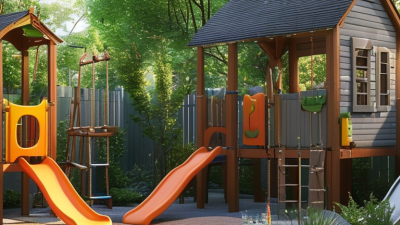
How to Choose the Best Playsets for Backyard Use?

Choosing the best playsets for backyard use involves more than comparing bright colors and low prices. A suitable playset should match your children’s ages, abilities, interests, and daily habits. It must also fit the available space without crowding fences, trees, patios, or windows. Measure the yard carefully, including the recommended safety zone around swings and slides.

A strong evaluation begins with construction details. Look for treated or weather-resistant materials, smooth edges, secure bolts, stable platforms, and clear weight limits. Wooden playsets may offer a natural appearance, while metal and plastic designs can simplify cleaning and maintenance. Check the manufacturer’s installation instructions and safety guidance before buying. Reputable brands usually provide replacement parts, warranty information, and customer support. Those details matter after the first rainy season.

Think about real backyard conditions. Will wet grass make the steps slippery? Can an adult reach every elevated platform? Will the swing path overlap a garden wall? These questions often reveal problems that product photos hide. No checklist is perfect. A playset that looks ideal online may feel too large once assembled. Children also outgrow equipment faster than expected, so adjustable or expandable designs may provide better long-term value. Regular inspections remain essential, even with high-quality equipment. Tighten loose hardware, examine ropes for fraying, and remove cracked plastic promptly. The safest choice is not always the biggest or most expensive model. It is the one that suits your space, supports active play, and can be maintained reliably for years.

How to Choose the Best Playsets for Backyard Use?

Define Your Backyard Space, Users, and Play Goals

Choosing the best playset starts with the backyard, not the catalogue. Measure usable length and width, then mark slopes, trees, fences, and low branches. Keep a generous fall zone around moving equipment. Grass may look soft, but worn soil becomes hard after rain. A level surface usually supports safer installation and easier maintenance. I once underestimated a narrow gate; delivery and assembly became awkward. That small mistake changed my planning process.

Next, identify who will use the playset and how they play. Toddlers need low platforms, short steps, and easy-to-grip rails. Older children often seek climbing, swinging, balancing, and imaginative spaces. Mixed-age families may need separate activity heights to reduce collisions. Ask how many children will play together. One child may use a compact structure well, while four children need clearer movement paths. Consider adult visibility from the kitchen or patio. A beautiful layout fails if supervision feels inconvenient. Check weight limits, materials, fasteners, and published safety guidance before purchase. I prefer clear instructions and replaceable parts, although “low maintenance” is rarely maintenance-free.

Tips: Sketch the yard on paper. Add play zones, shade, storage, and walking routes. Use cardboard boxes to test platform size. Watch children move through the mock-up. Their choices may challenge your assumptions. Recheck drainage after rain, because puddles reveal problems quickly. Leave room for future changes, too; interests and family routines rarely stay fixed.

Compare Playset Materials, Designs, and Age Suitability

Choosing a backyard playset starts with its material, not its color. Solid wood feels warm and blends with gardens, but it needs regular sealing. Without maintenance, cracks and splinters may appear. Powder-coated metal offers strong frames and clean lines. However, it can become hot under direct sunlight. Plastic or composite parts resist moisture and often feel softer for younger children. They may fade or become brittle over time.

Design should match how children actually play. A compact set with low steps, short slides, and enclosed platforms suits toddlers. Older children usually need challenging climbing walls, monkey bars, or taller slides. Check platform height, handrail spacing, fall zones, and weight limits. A wide base reduces movement during active play. I once underestimated swing clearance in a small yard. The set fit, but walking around it became awkward.

Age labels provide useful guidance, yet they cannot replace observation. A confident four-year-old may handle a feature that another child cannot. Choose equipment that offers manageable challenge, not unnecessary height. Look for rounded edges, secure fasteners, stable ladders, and surfaces that drain after rain. Install the playset on suitable impact-absorbing ground, following local safety guidance. Inspect it before each season. Small issues matter. A loose bolt, faded rope, or warped board deserves attention before children return to play.

How to Choose the Best Playsets for Backyard Use? — Compare Playset Materials, Designs, and Age Suitability

Playset Type Primary Material Typical Design and Components Recommended Age Range Main Advantages Limitations and Maintenance Best Backyard Use
Toddler Activity Center UV-stabilized plastic, sometimes with a steel support frame Low platform, short slide, crawl-through opening, molded steps and small climbing features. Approximately 18 months–5 years, subject to the product's specified age and weight limits
  • Low height reduces fall exposure.
  • Rounded surfaces are easy to clean.
  • Usually quick to assemble.
  • Outgrown relatively quickly.
  • Plastic can become hot in direct sunlight.
  • Check for fading, cracks and loose fasteners.
Small yards and supervised early play
Compact Swing-and-Slide Set Pressure-treated or naturally durable wood with metal swing hardware One platform, one slide, two belt swings or one swing plus a trapeze bar. Approximately 3–8 years; verify each component's instructions
  • Provides varied active play.
  • Fits many medium-sized yards.
  • Wood blends naturally with outdoor landscaping.
  • Requires periodic inspection and wood sealing where appropriate.
  • Needs a level, well-drained installation area.
  • Swings need adequate front-and-back clearance.
Families seeking a balanced starter playset
Wooden Fort Playset Cedar, redwood or treated structural lumber, with plastic or molded slides Elevated fort, climbing wall, ladder, slide, roof or canopy, and one or more swings. Approximately 3–10 years; older children require suitable deck height and component ratings
  • Encourages imaginative and physical play.
  • Can offer several activities at once.
  • Many layouts allow future accessory changes.
  • Requires more space, anchoring and assembly time.
  • Wood can split, weather or develop rough areas.
  • Inspect decks, railings, bolts and climbing grips regularly.
Medium or large yards with multiple children
Metal Frame Playset Powder-coated galvanized steel with plastic seats and slides Freestanding frame with swings, glider or spinner, slide and sometimes a small climbing section. Approximately 3–10 years, depending on swing-seat and frame ratings
  • Strong frame with a relatively slim footprint.
  • Generally resistant to insect damage and wood rot.
  • Often requires less surface maintenance than wood.
  • Metal surfaces may become hot in strong sun.
  • Coating damage can lead to corrosion.
  • All joints and anchors must remain tight and stable.
Yards needing a durable, space-efficient structure
Modular Adventure Playset Wood or steel frame combined with plastic, rope and metal accessories Multiple platforms, climbing wall, monkey bars, tube or wave slide, rope features and several swings. Approximately 5–12 years; use separate age ratings for challenging accessories
  • Supports climbing, balance, swinging and imaginative play.
  • Can accommodate different skill levels.
  • Often configurable for growing families.
  • Higher platforms need appropriate guardrails and fall protection.
  • More components mean more inspection points.
  • Requires substantial clearance and a stable foundation.
Large yards and active school-age children
Climbing and Fitness Frame Galvanized or powder-coated steel, hardwood or treated timber Monkey bars, climbing net, horizontal ladder, fire-pole alternative, rings or balance accessories. Approximately 5–12 years, with advanced elements reserved for children who can use them safely
  • Builds grip strength, coordination and upper-body control.
  • Offers challenging play without a large enclosed fort.
  • Works well for children who prefer climbing.
  • Higher physical demand than a basic swing set.
  • Requires careful supervision for beginners.
  • Ropes, grips, welds and anchor points need frequent checks.
Older children with an interest in active play
Inclusive Ground-Level Playset Powder-coated metal, durable plastic, composite panels and impact-resistant components Ground-level pathways, transfer platform, accessible ramp, wide slide, sensory panels and adaptive swing options. Approximately 2–12 years, depending on the individual activity and user's abilities
  • Supports children with varied mobility and sensory needs.
  • Ground-level access can simplify entry and supervision.
  • Combines social, sensory and physical activities.
  • Needs generous circulation space.
  • Accessibility features vary substantially by design.
  • Confirm transfer heights, clearances and surface continuity before purchase.
Shared family yards and inclusive play areas
Convertible Grow-With-Child Set Wood or steel frame with replaceable plastic and textile accessories Lower early-childhood configuration that can later be adjusted with a taller slide, climbing accessory or standard swing seats. Approximately 2–10 years, depending on the configuration used
  • Can extend useful life as children develop skills.
  • May reduce the need to replace the entire structure.
  • Flexible layouts suit changing family needs.
  • Conversion parts must be installed exactly as directed.
  • Some accessories remain age-specific.
  • Check the frame's maximum user weight after every modification.
Families planning for several years of use
Selection and safety note: Age ranges are typical guidance, not a substitute for the manufacturer's instructions. Choose equipment that matches each child's developmental ability, follow the stated user and weight limits, install it on a level surface with an appropriate impact-absorbing protective surface, and inspect the structure regularly for wear, corrosion, splinters, cracks, loose hardware and damaged ropes.

Evaluate Safety Features, Stability, and Certification Standards

Choosing the best backyard playset starts with injury prevention, not bright colors or extra slides. The U.S. Consumer Product Safety Commission reports roughly 200,000 playground-equipment injuries treated in emergency departments annually. Falls remain the leading hazard. I look for impact-absorbing surfacing, enclosed platforms, and guardrails that prevent small bodies from slipping through.

Stability deserves a hands-on check. Rock the frame before purchase. It should not twist, lift, or shift on level ground. Look for wide footings, corrosion-resistant fasteners, and clear anchoring instructions. The ASTM F1148 standard addresses residential playground equipment, including structural integrity and user protection. A seller should provide accessible test documentation, not vague claims about “safe design.” Certification alone is not magic.

Inspect the set after installation, especially after rain or frost. Check loose bolts, cracked plastic, exposed threads, and gaps near moving parts. CPSC guidance recommends regular maintenance and age-appropriate equipment; adult supervision still matters. The European EN 1176 series offers another useful benchmark for playground safety, although its application may differ by market. Do not confuse a certificate with perfect installation. That mistake is easy. A 2023 report from the U.S. Consumer Product Safety Commission also emphasizes that home playground injuries can involve falls, entrapment, and structural failures. I would photograph each anchor point and keep the assembly instructions. Some instructions are surprisingly unclear, and that deserves a second review before children climb.

Plan Installation, Maintenance, and Long-Term Durability

Choosing a backyard playset requires more than checking its slide height. Installation affects safety, maintenance, and service life. The U.S. Consumer Product Safety Commission reports about 200,000 playground injuries receive emergency treatment annually. Falls cause most of them. Place the structure on level ground with impact-absorbing surfacing, not bare soil or concrete. Follow the assembly instructions closely. A slightly loose bolt can become a serious problem after repeated movement.

Durability depends on materials and daily habits. Inspect bolts, anchors, platforms, ropes, and swing connections every month. Look for rust, splintered wood, cracked plastic, or water trapped beneath joints. The CPSC Public Playground Safety Handbook recommends removing hazards and maintaining protective surfacing regularly. ASTM F1148 also provides a useful benchmark for residential play equipment design. Still, compliance language does not replace practical judgment. Rainy climates may require more frequent inspections than the manual suggests. I would rather inspect too often than trust a neglected checklist.

Tips

Measure the fall zone before delivery. Keep it clear of fences, branches, and garden tools. Use a soft landing layer, and check its depth after heavy rain. Tighten hardware carefully, but do not crush plastic parts. Keep a simple maintenance log with dates and photos. Children notice wobbling quickly. Adults sometimes do not. Expect replacement parts eventually, because outdoor equipment rarely stays untouched for years.

How to Choose the Best Playsets for Backyard Use?

Typical Service-Life Ranges by Playset Material

Material choice strongly affects long-term durability. Pressure-treated wood can typically last about 10–20 years when sealed and inspected regularly, while galvanized or powder-coated steel commonly lasts 10–15 years when protected from rust. Plastic components generally last about 5–10 years, with UV exposure and temperature changes affecting performance. Plan for level installation, secure anchoring, routine hardware checks, annual surface maintenance, and prompt replacement of cracked or corroded parts.

Set a Practical Budget and Select the Best Playset Value

A backyard playset is not just swings and slides; it is a small construction project.

Set a total budget before browsing, including delivery, assembly, anchors, and impact-absorbing surfacing. A basic unit may look affordable until those extras appear. The U.S. Consumer Product Safety Commission’s National Electronic Injury Surveillance System estimates that more than 200,000 children receive emergency treatment for playground injuries annually. Falls represent roughly three quarters of reported cases.

Safety spending is not an optional upgrade.

Compare value by usable features, not the number of towers.

Measure level ground, leave a clear fall zone, and keep the set away from fences and trees. ASTM F1148 guidance emphasizes structural strength, entrapment protection, and safe access. Ask for test documentation and clear assembly instructions.

Choose weather-resistant materials, rounded edges, handgrips, and adjustable components for growing children. A practical budget might reserve 15–25% for installation, surfacing, and maintenance.

That range is my planning rule, not an official benchmark. It may be too low for rocky ground or custom work. Check twice.

Decorative roofs are easy to overvalue, while weak anchors are expensive to correct. Price replacement hardware, annual inspections, and shade before buying.

The cheapest purchase can become the costliest one outdoors.