A backyard trampoline should invite play without making setup, supervision, or maintenance an afterthought. This guide explores ten Springfree trampoline options for families comparing size, shape, features, and everyday fit. The phrase spring free trampolines is often used broadly, but product details can differ by model and market. Check the current manufacturer specifications before choosing. Small differences matter.
A useful comparison starts with the space available. Measure the intended area, then leave room around the frame and access points. Consider who will use the trampoline, how many jumpers are expected, and whether a ladder or enclosure suits your routine. Look closely at weight limits, warranty terms, and care instructions rather than relying on appearance alone. Those details are easy to overlook.
No single model is right for every yard. A larger jumping area may sound appealing, yet it can crowd a narrow garden or make placement awkward. And yes, dimensions can be confusing. This overview is designed to make the trade-offs easier to see, not to replace careful product research. We’ll highlight practical differences and questions worth asking before purchase. A little skepticism helps: features and availability may change, and promotional claims should be checked against official product information. That is a less exciting way to shop. It is also more dependable.
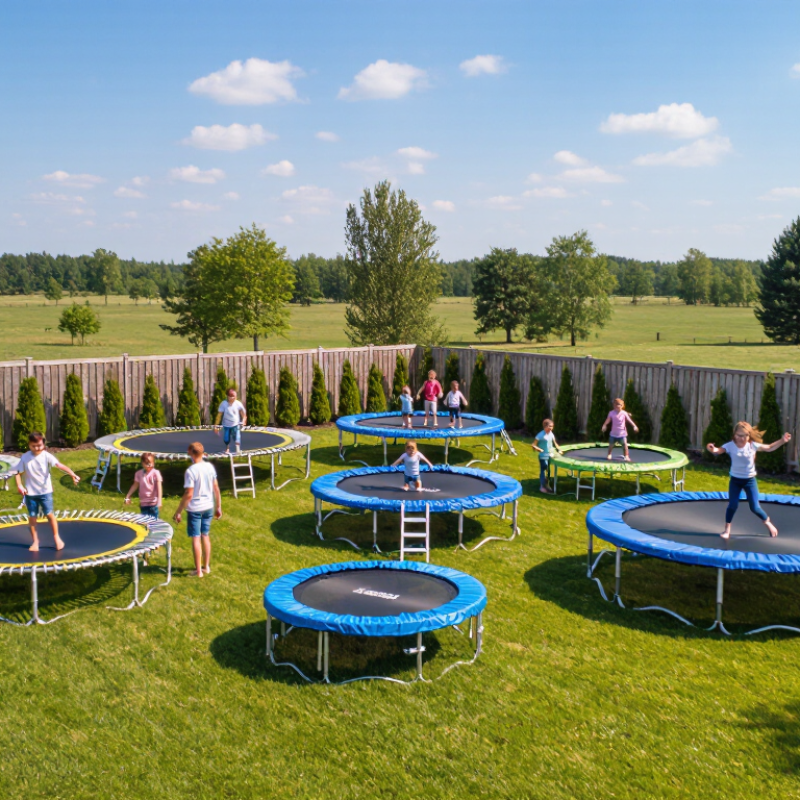
Traditional trampolines stretch a mat across metal springs attached to the frame. Springless designs use flexible rods beneath the jumping surface instead. This changes where the moving parts sit, and may reduce direct contact with springs around the mat’s edge. It does not remove every hazard. Not automatically safer.
The bounce can feel different, too. Spring tension often produces a familiar, lively rebound, while rod-based systems may feel more controlled. Actual performance depends on the model, the jumper’s weight, and how well the trampoline is assembled. There is a trade-off. Springless models can have a higher purchase price, and replacement parts may be less common locally. Traditional models, meanwhile, need regular checks for rust, stretched springs, and gaps in padding. A small tear matters.
When comparing options, inspect the enclosure, entry closure, frame stability, and parts availability—not just the jumping surface. Set the trampoline on level ground, follow its assembly instructions, and supervise children. One detail is easy to overlook: a design that keeps springs out of reach still needs careful use and maintenance. The distinction is useful, but it is not the whole safety story.
Choosing among ten trampoline models starts with the yard, not the product photos. Measure the usable area, then leave the clearance specified by the manufacturer on every side. A frame that fits on paper may crowd a fence, tree, or patio once assembled. Check the jumping-surface dimensions separately from the full footprint.
Capacity matters. Compare the stated weight limit and intended number of jumpers, and follow the stricter guidance. Look closely at enclosure height, entry design, frame construction, and how the safety system keeps hard parts away from jumpers.
Then consider bounce feel, ladder access, and who will use the trampoline. These details vary. Assembly time, replacement-part availability, warranty terms, and seasonal care can affect long-term value more than a small price difference.
Read current specifications rather than relying on old reviews, since model details can change. If two options look nearly identical, compare their dimensions and maintenance requirements line by line. A confident choice still deserves a second look.
Choosing among ten springless trampoline styles starts with the yard, not the color. A compact round model suits a narrow lawn, while a medium round option leaves room for a parent nearby. A large round design gives several children more jumping space, though it needs a generous safety buffer. An oval model can fit a long, slim garden. Measure twice. A rectangular shape may work where the usable area is clearly defined, but check its required clearance carefully.
Other needs suggest different setups. A low-profile model can make entry easier, but it still needs stable, level ground. An enclosed version may help keep jumpers within the designated area; adults should still supervise. A smaller, lower-capacity option can suit one young jumper. A sturdier model may better accommodate frequent family use, provided its stated user limits match your household. For yards with limited sun, consider placing the trampoline where the mat stays visible and dry. Not glamorous, but useful.
The tenth choice is simply the best-fitting model after checking measured dimensions, user limits, assembly guidance, and replacement-part availability. These details matter more than a broad “best overall” label. Keep branches, fences, and hard surfaces outside the recommended clearance. Yard measurements can be misleading, especially around slopes or garden beds. I would not assume a larger trampoline is automatically better; sometimes the smaller one leaves safer, more usable space.
When comparing the ten best springless trampolines, look beyond jumping surface size. Check how the enclosure closes, whether openings could trap fingers, and how the frame and support rods are covered. Read the product’s safety instructions and certification details rather than relying on photos alone. Keep the trampoline on level ground, away from fences, walls, branches, and hard play equipment. Follow the manufacturer’s clearance requirements; a mat that fits the lawn may still leave too little safe space around it. Supervise children, and avoid overcrowding. One jumper at a time is a sensible rule.
Measure the whole setup area, including access for carrying parts and room to open the enclosure. Check for slopes, soft ground, drainage problems, and exposure to strong wind before choosing a size. Anchor requirements vary, so consult the installation manual for your surface and local conditions. Assembly can take longer than expected, especially when aligning the frame or attaching the net. Allow a second adult to help if the instructions recommend it. Measure twice. I’ve seen people focus on the box dimensions and forget the clearance. That small oversight can change which model is actually suitable.
| Rank | Size and Shape | Approx. Mat Area | Suggested Yard Space | Best For | Safety and Installation Considerations |
|---|---|---|---|---|---|
| 1 | Compact round, 8 ft (2.4 m) | About 4.5 m² (48 sq ft) | At least 6.4 × 6.4 m (21 × 21 ft) | Small yards and younger jumpers under close supervision | Allow about 2 m (6.5 ft) of clear space around the frame. Check access through gates and paths before delivery; assembly may take several hours. |
| 2 | Compact round, 10 ft (3.0 m) | About 7.1 m² (76 sq ft) | At least 7.0 × 7.0 m (23 × 23 ft) | Families with limited space who want more room than a compact model | Choose a level, firm site away from fences, trees, and hard surfaces. Follow the specific model’s assembly and anchoring instructions. |
| 3 | Round, 11 ft (3.4 m) | About 8.9 m² (96 sq ft) | At least 7.4 × 7.4 m (24 × 24 ft) | Everyday family recreation in a medium-sized yard | Confirm there is adequate overhead clearance and a clear route to the entrance. Plan for two adults to manage large or heavy components. |
| 4 | Round, 12 ft (3.7 m) | About 10.4 m² (113 sq ft) | At least 7.7 × 7.7 m (25 × 25 ft) | Families seeking a versatile, mid-sized jumping area | Install on level ground and keep the surrounding safety zone unobstructed. Allow several hours for assembly, depending on experience and site preparation. |
| 5 | Round, 13 ft (4.0 m) | About 12.6 m² (136 sq ft) | At least 8.0 × 8.0 m (26 × 26 ft) | Larger yards and regular recreational use | Measure the full frame footprint, not only the jumping mat. Secure the trampoline as directed, particularly in locations exposed to strong winds. |
| 6 | Large round, 14 ft (4.3 m) | About 14.5 m² (156 sq ft) | At least 8.3 × 8.3 m (27 × 27 ft) | Households with ample yard space | Large components may require extra helpers and a wider delivery route. Keep the full clearance area free of play equipment and garden structures. |
| 7 | Oval, approximately 11 × 8 ft (3.4 × 2.4 m) | About 6.4 m² (69 sq ft) | At least 7.4 × 6.4 m (24 × 21 ft) | Narrow or rectangular yards | Check the orientation of the longer side against the available yard space. Maintain clearance around the entire oval, including its ends. |
| 8 | Oval, approximately 13 × 8 ft (4.0 × 2.4 m) | About 7.5 m² (81 sq ft) | At least 8.0 × 6.4 m (26 × 21 ft) | Families who need a longer jumping area without a wide circular footprint | Check for level ground along the full length and width. Follow the product instructions for frame assembly, anchoring, and required clearances. |
| 9 | Large oval, approximately 14 × 10 ft (4.3 × 3.0 m) | About 10.1 m² (109 sq ft) | At least 8.3 × 7.0 m (27 × 23 ft) | Longer yards and active family use | Confirm the full footprint fits with clearance on every side. Allow extra time for assembly and avoid installing near retaining walls or slopes. |
| 10 | Large rectangular, approximately 13 × 10 ft (4.0 × 3.0 m) | About 9.3 m² (100 sq ft) | At least 8.0 × 7.0 m (26 × 23 ft) | Yards where a rectangular layout makes better use of the available space | Verify the model’s exact dimensions and weight limits before purchase. Assemble on a level surface and keep the landing and access areas clear. |
Choosing the right trampoline starts with the space around it, not the largest model you can afford. Measure the yard, then leave clear room around every side. Check for branches, fences, and low roof edges. A level, firm surface helps keep the frame stable. If flexible rods sit outside the jumping area, inspect their covers and attachment points before buying. Small yards need restraint.
Tips: Measure twice. Check the manual. Compare the listed user limit with your household’s needs, and plan for one jumper at a time unless the instructions say otherwise. A roomy enclosure can help contain energetic bouncing, but it still needs secure, well-fitting entry closures.
Think about who will use it and how often. Younger children may benefit from a lower step-in point and a clear view from nearby seating. For frequent use, look for durable mat stitching and weather-resistant materials, then check whether replacement parts are available. Set-up time matters, too; a complicated assembly can turn into an annoying weekend project. I’d still verify dimensions in person when possible, because product diagrams can make a trampoline look smaller than it feels in a real yard.