7 Tips for Choosing a Reformer Pilates Machine
Choosing a reformer Pilates machine requires more than comparing glossy frames and spring colors. Your decision affects movement quality, safety, maintenance, and daily motivation.
Demand is rising. ClassPass’s 2024 Look Back Report identified Pilates as the most-booked workout worldwide, with bookings increasing 66% year over year. The Global Wellness Institute reported that the global wellness economy reached $6.3 trillion in 2023. These figures show strong interest, but they do not prove that every reformer suits every body, room, or budget.
Start with evidence, not excitement. The seven tips ahead examine carriage stability, spring resistance, shoulder-rest design, footbar adjustment, materials, storage, and after-sales support. A quiet carriage should glide smoothly across a small studio floor. A solid frame should remain steady during controlled footwork. It should also accommodate different leg lengths and training levels.
Joseph Pilates, whose teaching shaped modern reformer practice, is widely credited with saying, “Physical fitness is the first requisite of happiness.” That principle still matters. A machine should support consistent, controlled movement, rather than encourage impressive-looking routines. Fit matters more than novelty.
There is no perfect purchase. A heavier commercial model may feel secure, yet occupy valuable space. A compact home reformer may save money, yet offer fewer adjustments. My own evaluation would still question long-term spring durability, because product pages rarely reveal enough testing detail. These practical tips aim to make that uncertainty visible before payment, installation, and the first workout.
Understanding Reformer Pilates and Its Main Uses
The reformer is not simply a sliding platform.
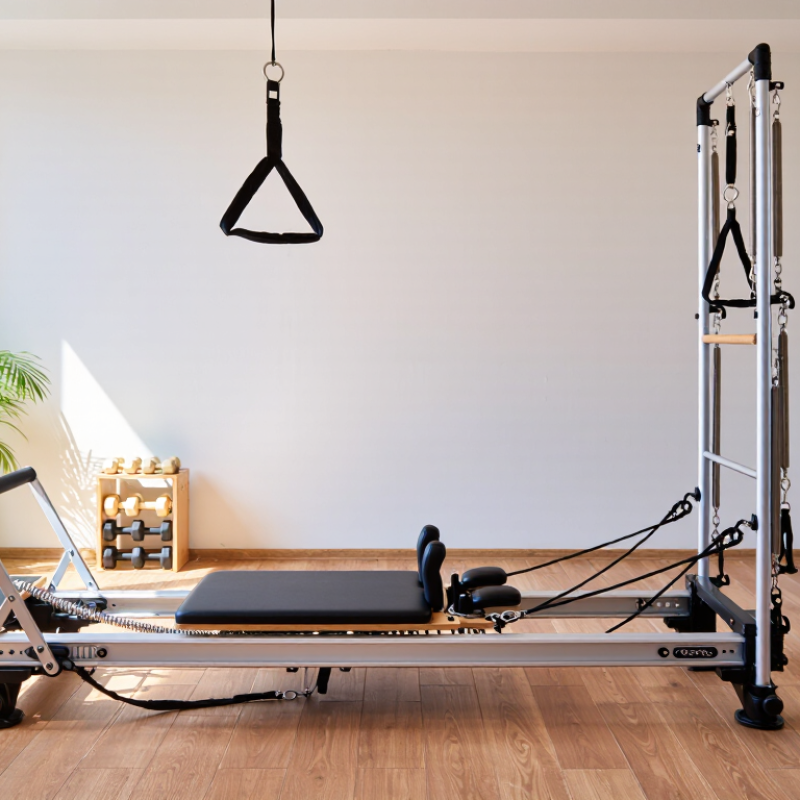
It combines a moving carriage, adjustable springs, a footbar, and straps. These parts create resistance in both directions. That makes the machine useful for controlled strength, mobility, balance, and body awareness. Unlike floor exercises, it gives the feet and hands clear contact points. Small spring changes can alter the challenge quickly.
Movement & Training
Common uses include core training, posture practice, joint-friendly strength work, and movement retraining. An instructor may use footwork to build leg control, then add straps for hip mobility.
With a box, the same carriage can support seated, kneeling, or lying exercises. Beginners often need slower springs, not heavier ones. More resistance is not always more progress.
For pain, pregnancy, or recent surgery, professional medical guidance matters. Pilates instruction cannot replace diagnosis.
When choosing a reformer, connect its features to your intended use.
Check carriage stability, smooth travel, spring options, and a footbar that adjusts securely. Measure ceiling height and storage space before buying. Leave room to step around it. Padding matters during longer sessions.
I once underestimated noise and reach distance; both affected consistency. A machine can look impressive yet feel awkward at home. Test the transitions, not only the exercises. Your ideal setup may be less advanced, but easier to use regularly.
Assessing Your Space, Budget, and Training Objectives
7 Tips for Choosing a Reformer Pilates Machine
Assess your available space before comparing features. Measure the room, ceiling height, and walking clearance around the machine. A compact model may fit better, but limited carriage travel can affect some exercises. Tip 1: Mark the floor with tape first. Tip 2: Check whether the machine folds safely and stores vertically. Tip 3: Leave enough room for straps, springs, and maintenance access.
Set a realistic budget that includes delivery, assembly, and future repairs. Cheaper equipment can work well, yet weaker frames or noisy wheels may reduce training quality. Tip 4: Choose stable construction and smooth movement over decorative extras. Tip 5: Test the spring resistance and footbar adjustments whenever possible. I once underestimated setup time; that mistake made regular training less convenient. Measure twice.
Your training objective should guide every feature. Beginners may need clear adjustments and moderate resistance. Experienced users may prefer a wider spring range, stronger support, and more precise carriage control. Tip 6: Match the machine to your current level, not an imagined routine. Tip 7: Consider whether your goals include rehabilitation, mobility, strength, or home instruction. Professional guidance matters, especially after an injury. A qualified instructor can identify unsafe positioning and recommend suitable resistance. My own preference has changed over time, so reviewing your goals every few months is sensible.
7 Tips for Choosing a Reformer Pilates Machine
A practical 100-point planning framework for assessing your space, budget, and training objectives before buying a reformer.
Space, budget, and training objectives receive the highest weighting because they determine whether the machine will fit safely, remain affordable, and support the intended workouts. Use the remaining points to compare adjustability, safety, storage, and maintenance requirements.
Checking Comfort, Stability, Safety, and Build Quality
7 Tips for Choosing a Reformer Pilates Machine
Checking Comfort, Stability, Safety, and Build Quality
A reformer should feel supportive before it feels challenging. Sit on the carriage and notice whether the padding spreads pressure evenly. Hard edges can become distracting during longer sessions. The shoulder rests should hold your position without pressing painfully into your neck. Test several spring settings, if possible. Smooth resistance matters more than impressive-looking accessories. I once chose a machine with firm padding, but my hips felt tired after twenty minutes. That mistake changed how I assess comfort.
Stability deserves close attention. Place one foot on the platform and apply gentle pressure. The frame should remain steady without rocking or squeaking. Check whether the carriage rolls quietly along the rails. Small movements may reveal loose fittings or uneven construction. A wide base usually improves confidence during standing exercises. Still, a heavy frame is not automatically safer. Examine the footbar, ropes, pulleys, and locking points carefully. Each part should move predictably and stop securely. If instructions seem unclear, pause before using the machine. Guesswork is not a safety feature.
Build quality also affects long-term value. Look for strong joints, durable upholstery, and corrosion-resistant hardware. Stitching should be even, especially around areas receiving repeated pressure. Ask whether replacement parts and maintenance guidance are available. Reliable equipment needs regular inspection, not blind trust. Check springs for damage and tighten fittings as recommended. I sometimes focus too much on appearance. That is worth reconsidering. A plain reformer with stable mechanics may serve better than a polished model with fragile details. Safety comes before speed.