
Why Choose a Tiffin Lunch Box for Bulk Buying?

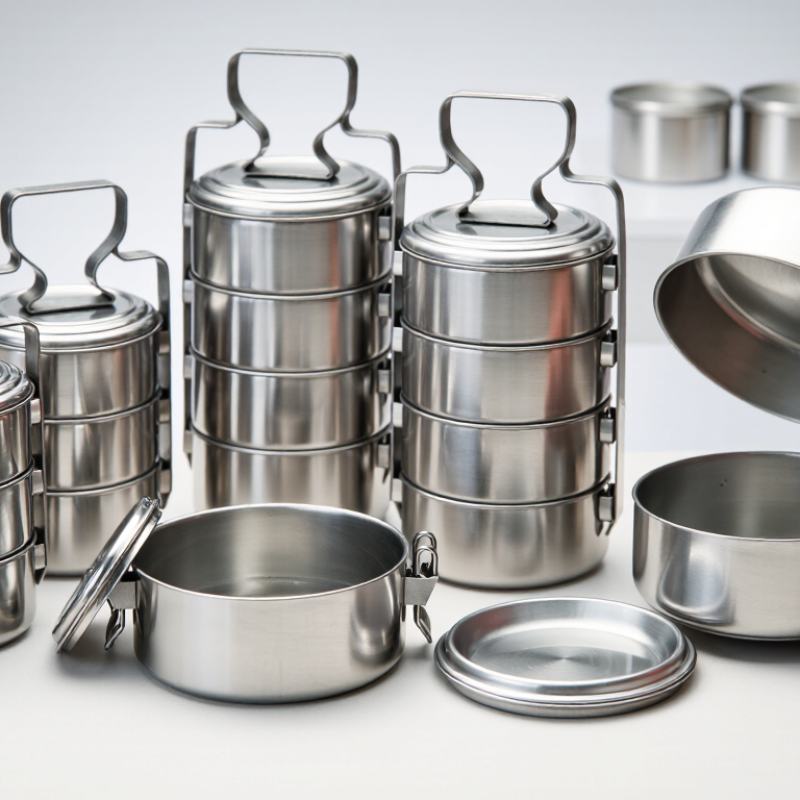
Why Choose a Tiffin Lunch Box for Bulk Buying? This question matters to schools, offices, caterers, hotels, and meal-delivery businesses. Buying dozens or hundreds of containers requires more than comparing prices. A reliable Tiffin Lunch Box should protect food, support daily handling, and remain practical after repeated washing.

Food scientist Dr. Kantha Shelke, whose work includes food processing and packaging, emphasizes a useful principle: “Food safety is a shared responsibility.” Her point applies directly to bulk purchasing. Buyers must examine material quality, lid security, compartment design, cleaning requirements, and supplier consistency. A poorly sealed box can leak curry across a delivery bag. A weak hinge may fail before the first month ends. Small defects become expensive at scale.

Bulk buying can reduce unit costs and simplify inventory control. It may also create waste when products arrive with uneven sizes or damaged parts. That risk deserves honest attention. The lowest quote is not always the best value. A stronger option may offer food-grade materials, dependable replacement parts, and clearer quality documentation. Check samples before placing a large order. Test the lids. Stack filled boxes. Wash them repeatedly. Real use reveals weaknesses that product photos hide.

This introduction will examine the practical reasons behind choosing a Tiffin Lunch Box for bulk buying. It will consider durability, hygiene, customization, logistics, and long-term operating costs. The goal is simple: help buyers choose containers that work reliably, not merely look affordable.
Why Choose a Tiffin Lunch Box for Bulk Buying?

Define Tiffin Lunch Boxes by Capacity, Compartments, and Material Standards

Why Choose a Tiffin Lunch Box for Bulk Buying?

For bulk purchasing, capacity should match real meal patterns, not impressive-looking dimensions. A 900–1200 ml tiffin lunch box often suits one adult meal. Smaller 300–500 ml tiers can hold fruit, sauces, or snacks. A larger box is not always better. Oversized containers waste shelf space and may encourage overfilling.

Compartments make portion planning easier. Two or three separate tiers can keep rice, vegetables, and protein apart. This helps preserve texture during transport. Removable dividers also simplify cleaning, though they can create narrow corners. Inspect those corners carefully. In warehouse handling, stackable shapes reduce carton movement and storage pressure. Lids should close evenly after repeated opening, not only during the first inspection.

Material standards deserve equal attention. Stainless steel should resist rust, staining, and food odors under normal use. For plastic components, request food-contact documentation and confirm suitability for hot foods. Silicone seals need flexibility without a strong chemical smell. Ask suppliers about temperature limits, leak testing, surface finishes, and batch consistency. These records improve purchasing reliability. They also reveal weak points before large quantities arrive.

A small pilot order is wise. Count damaged units, test filled boxes upside down, and check whether seals remain secure after washing. Some failures appear only after several cycles. This step costs time, but ignoring it can cost much more.

Why Choose a Tiffin Lunch Box for Bulk Buying?

Define tiffin lunch boxes by capacity, compartments, and material standards to match different meal sizes and purchasing needs.

The chart shows representative nominal configurations commonly used for product specification: compact boxes around 500 mL, standard two-compartment boxes around 1,000 mL, three-compartment boxes around 1,500 mL, and family or catering formats around 2,000 mL. For bulk purchasing, also verify food-contact compliance, leak-resistant seals, dishwasher suitability, and material identification such as stainless steel 304/18-8 or food-contact polypropylene (PP 5), where applicable.

Compare Bulk Total Cost Using MOQ, Unit Price, and Replacement Rates

Why Choose a Tiffin Lunch Box for Bulk Buying?

Compare Bulk Total Cost Using MOQ, Unit Price, and Replacement Rates

When purchasing tiffin lunch boxes in bulk, the lowest unit price can mislead a buyer. MOQ, or minimum order quantity, changes the cash commitment immediately. An offer at $4 per box may require 500 units, creating a $2,000 purchase before freight or storage. A $4.60 option with an MOQ of 200 may fit a school, catering team, or workplace better. Small orders cost more.

A practical comparison should include expected replacements. If 5% of 500 boxes need replacement annually, that means 25 additional units. At $4 each, replacements add $100. However, replacement rates are rarely certain. My first estimate was too optimistic. I ignored cracked lids, missing seals, and boxes left in shared kitchens. Track six months of usage when possible. Then calculate total cost using initial units × unit price, plus replacement units × replacement price, delivery, and handling.

Test before committing. Tiffin design directly affects replacement costs. Stainless steel bodies often tolerate repeated washing, while thin hinges and weak clips need closer inspection. Request samples before accepting the MOQ. Check lid fit after ten wash cycles, test for leaks, and record dents from ordinary handling. A slightly higher price may be economical if fewer boxes require replacement. Quality testing also needs time and labor, which buyers often forget to budget. Include a reserve for that work.

Apply FDA’s 2-Hour Rule and USDA’s 40°F Food-Safety Guidance

Why Choose a Tiffin Lunch Box for Bulk Buying?

Bulk buying can reduce packaging waste and simplify weekly meal preparation. A tiffin lunch box also separates rice, vegetables, sauces, and protein. However, separate compartments do not make food automatically safe. Temperature control remains essential.

The FDA advises refrigerating perishable food within two hours. That limit falls to one hour when temperatures exceed 90°F. The USDA recommends keeping cold foods at 40°F or below. Use an insulated carrier with frozen gel packs, especially during commuting or outdoor storage. A small food thermometer provides better evidence than touch. It is easy to underestimate warmth.

According to CDC estimates, foodborne illnesses affect about 48 million people in the United States each year. Approximately 128,000 require hospitalization, and about 3,000 die.

These figures explain why bulk meal planning needs disciplined handling. Divide large portions into shallow containers before chilling. Avoid placing steaming food directly into a tightly packed lunch box. Steam trapped inside can slow cooling. That detail is often overlooked.

A practical routine is simple. Pack chilled portions, seal each compartment, and mark the packing time. Discard food left unrefrigerated beyond FDA limits. A perfect schedule is unrealistic, but guessing is worse. Consistent cooling makes a tiffin box useful, not merely attractive.

Evaluate Reusability Against EPA’s 28% Packaging-Waste Share

Why Choose a Tiffin Lunch Box for Bulk Buying?

The U.S. Environmental Protection Agency has reported that packaging represents about 28% of municipal solid waste. This figure includes containers, wrappers, and other packaging discarded after use. For offices, schools, and catering teams, repeated disposable packaging can quickly fill collection bins. A reusable tiffin lunch box offers a practical alternative for daily meals.

One box can replace many single-use containers during a working week. Its stacked compartments separate rice, vegetables, fruit, and sauces without extra bags. In my experience, this arrangement also makes portion planning easier. Bulk buyers can standardize meal packing and reduce repeated packaging purchases. Stainless steel models usually tolerate frequent washing, but hinges and seals still need inspection. Small leaks become expensive when multiplied across hundreds of boxes.

Reuse is not automatically waste-free. Each tiffin requires water, detergent, transport, and reliable return habits. A box left in a desk drawer delivers no environmental benefit. Procurement teams should measure return rates, cleaning capacity, replacement needs, and actual service life. EPA’s 28% packaging-waste share gives the problem scale, but it does not prove every reusable choice performs equally. A poorly managed program may shift waste elsewhere. That uncomfortable possibility deserves attention before ordering in bulk.

Why Choose a Tiffin Lunch Box for Bulk Buying? – Evaluate Reusability Against EPA’s 28% Packaging-Waste Share
Evaluation dimension Reusable tiffin lunch box Single-use lunch packaging What the data indicates
EPA packaging-waste context Designed for repeated use Designed for one use before disposal or recycling The U.S. EPA reported that containers and packaging accounted for approximately 28.1% of municipal solid waste generation in 2018.
EPA packaging quantity Can replace multiple disposable containers over its service life Part of the approximately 82.2 million short tons of U.S. containers and packaging generated in 2018 Reducing packaging at the point of consumption directly targets a major waste category.
Annual use assumption 250 uses per year in the example scenario 250 disposable packaging sets per year in the same scenario Using the same lunch frequency makes the comparison transparent and avoids overstating savings.
Potential packaging units avoided Up to 250 sets per user per year, if one tiffin replaces one disposable set each use Approximately 250 sets per user per year under the stated assumption The avoided quantity depends on actual use, continued ownership, and whether the lunch is packed without disposable liners.
Five-year use potential 1,250 uses at 250 uses per year, provided the product remains functional 1,250 disposable packaging sets under the same use pattern Longer service life increases the number of avoided single-use items per purchased unit.
Bulk-buying efficiency One reusable unit can serve one regular user repeatedly; shared purchasing can standardize meal packing Requires recurring purchases or ongoing consumption of disposable packs Bulk purchasing is most defensible when units are actively assigned and used, rather than stored as surplus.
Waste-prevention priority Prevention through repeated use Disposal or recycling after use The EPA waste hierarchy generally places source reduction and reuse above recycling and disposal.
Cleaning and operating requirement Must be emptied, cleaned, dried, and inspected after use Minimal container cleaning, but continued packaging consumption Reuse benefits depend on practical washing access and consistent user participation.
Best-fit purchasing decision Suitable for regular lunches, meal-prep programs, schools, offices, and catering routines with return-and-wash systems Useful where return, washing, storage, or food-safety controls are not feasible Choose reusable units when expected use is frequent enough to keep each unit in service.
Data note: The EPA figures refer to U.S. municipal solid waste generated in 2018: approximately 292.4 million short tons overall and 82.2 million short tons of containers and packaging, equal to about 28.1%. The 250-use and five-year figures are transparent planning assumptions for comparing repeated use with an equivalent disposable-lunch pattern; they are not a product-life guarantee.

Sources: U.S. Environmental Protection Agency, Facts and Figures about Materials, Wastes and Recycling: Containers and Packaging; U.S. Environmental Protection Agency, National Overview: Facts and Figures on Materials, Wastes and Recycling.

Select Suppliers by ISO 9001 Quality Controls, Warranty, and Lead Time

Why Choose a Tiffin Lunch Box for Bulk Buying?

Select Suppliers by ISO 9001 Quality Controls, Warranty, and Lead Time

Bulk buying a tiffin lunch box requires more than comparing unit prices. ISO 9001 certification indicates documented quality processes, corrective actions, and traceable production records. The ISO Survey 2022 reported more than 1.26 million ISO 9001 certificates across 189 countries and economies. Certification is useful, but it is not a guarantee of flawless goods.

Ask suppliers for inspection plans, food-contact material documents, and sample approval records. Check whether welds are smooth, lids close evenly, and compartments resist leakage after repeated use. Small defects become expensive when thousands of boxes arrive together. We learned this the hard way.

Warranty terms should define coverage, evidence requirements, replacement timing, and responsibility for defective units. A clear warranty shows operational confidence, not merely sales language. However, buyers should avoid vague promises. Request written limits and realistic remedies.

Lead time also deserves careful measurement. The World Bank Logistics Performance Index 2023 noted that international shipments can spend an average of 44 days moving through logistics systems. Ask for production time, inspection time, and shipping time separately. Include buffer days for holidays and port delays. Shorter is not always safer. A rushed order may weaken inspection controls, although some suppliers may dislike this question. Select the supplier with consistent records, transparent communication, and evidence that matches the promised delivery schedule.