What Is a Wooden Playset and How to Choose One?
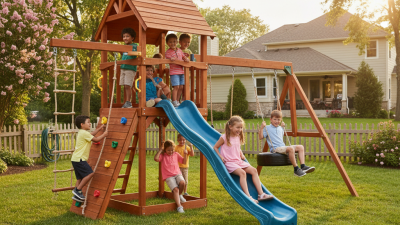
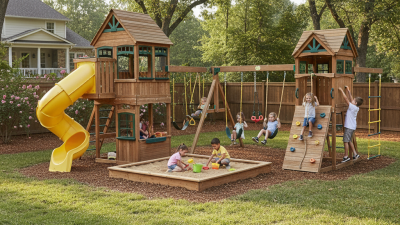
A wooden playset turns part of a backyard into a small world for climbing, swinging, sliding, and imaginative play. Usually built from cedar, redwood, or treated lumber, it can include towers, ladders, swings, bridges, and shaded platforms. The material feels warm and natural. It also demands attention. Wood can split, soften, or shift when exposed to rain, sunlight, insects, and repeated use.
Donna Thompson, a longtime playground-safety expert, has said, “The goal is not to eliminate risk, but to manage it.” That principle matters when choosing wooden playsets. Children need reasonable challenges, but sharp edges, loose bolts, unstable anchors, and hard ground create avoidable hazards. Look closely at the construction. Are the posts firmly anchored? Are the swing beams reinforced? Do handgrips feel smooth? Is the fall area covered with an appropriate impact-absorbing surface?
Size matters too. A compact set may suit a small yard, but children can outgrow it quickly. A larger structure needs more clearance and regular maintenance. Check the manufacturer’s age guidance, weight limits, installation instructions, and inspection recommendations. Independent safety certifications can also provide useful reassurance, although certification should not replace careful observation.
I once assumed thicker wood always meant better quality. That is not necessarily true. Design, drainage, hardware, and installation can matter just as much. The best wooden playsets balance durability, safety, available space, and the way children actually play. Expect maintenance. Recheck every season. A beautiful playset is only a good choice when it remains secure after months of real backyard use.
What Is a Wooden Playset? Components, Uses, and Residential Types
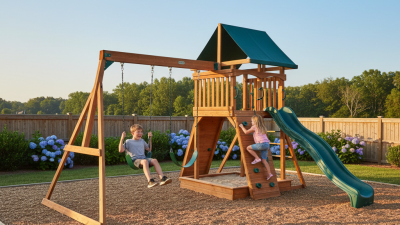
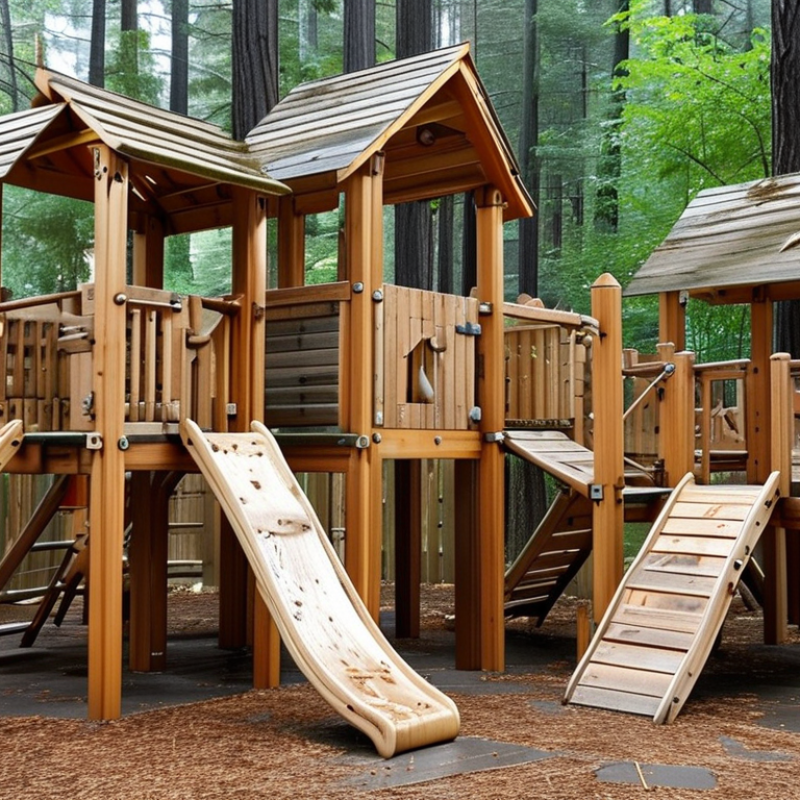
A wooden playset is a backyard structure designed for active, imaginative play. Its core components usually include timber posts, a raised deck, guardrails, swings, a slide, climbing grips, and a ladder. Some models add a sandbox, picnic table, or rope bridge. The wood should resist moisture and decay, while rounded edges reduce snagging and splinter risks. Small details matter.
Residential playsets generally fall into three types: compact toddler units, elevated tower sets, and modular systems with expandable sections. A compact unit suits limited yards and younger children. Tower designs provide climbing and sliding activities but require more clearance. Modular sets offer flexibility, although extra features can create harder inspection points. The U.S. Consumer Product Safety Commission reported about 205,000 emergency-department-treated playground injuries annually among children aged 14 and younger during 2009–2014; falls represented roughly 58 percent. That figure concerns public playgrounds, but the warning remains relevant at home.
Choose equipment according to the child’s age, height, and coordination, not appearance alone. Check the manufacturer’s age range and follow ASTM F1148-based safety guidance for home playground equipment. Measure the full use zone, including swing movement and slide exits. Install impact-absorbing surfacing, anchor every support, and keep the structure away from fences or tree branches. Inspect bolts, wood joints, and surface wear each season. I would not trust a beautiful stain as proof of durability. Drainage, maintenance, and honest supervision matter more. A wooden playset is never completely “set and forget.”
Wood Choices: Cedar, Redwood, and Treated Pine Compared by Durability
What Is a Wooden Playset and How to Choose One?
A wooden playset combines climbing platforms, swings, slides, and ladders in a backyard structure. Its wood choice affects strength, maintenance, comfort, and service life. Cedar, redwood, and treated pine are common options, but none performs perfectly in every climate.
Cedar contains natural preservatives that improve resistance to insects and decay. It is lightweight, easy to shape, and usually comfortable under bare hands. Redwood offers similar decay resistance, with good dimensional stability in changing weather. The USDA Forest Products Laboratory’s Wood Handbook explains that moisture control is central to preventing fungal decay. Wood generally becomes vulnerable when moisture remains above roughly 20 percent. Cedar and redwood still need sealing, drainage, and regular inspections. That matters.
Treated pine often costs less and provides strong structural performance. Pressure treatment can protect wood against decay and insects, especially when posts contact soil. The American Wood Protection Association recommends selecting treatment categories according to exposure, including ground-contact conditions. The preservative label and local building guidance should be checked before installation. The U.S. Environmental Protection Agency also advises following handling and disposal instructions for treated wood. I once favored cedar automatically, but that judgment was too simple. A shaded, wet yard may shorten its life quickly. Treated pine can be the more practical choice when its cut ends are protected and hardware stays tight. Redwood feels refined, yet availability and price can vary sharply by region. Look for rounded edges, smooth sanding, sound knots, and no splinters near handholds. Check the frame after heavy rain. Small cracks deserve attention.
What Is a Wooden Playset and How to Choose One? - Wood Choices: Cedar, Redwood, and Treated Pine Compared by Durability
| Wood Type |
Typical Durability Rating |
Natural Decay and Insect Resistance |
Typical Outdoor Service Life* |
Strength and Structural Use |
Maintenance Requirements |
Best Choice When |
| Western Red Cedar |
High
Especially heartwood |
Naturally resistant to fungal decay and many insects because of its extractives.
Sapwood has substantially lower resistance than heartwood.
|
Approximately 10–20 years when well designed, kept dry, and maintained.
Actual life varies with climate, drainage, and wood quality.
|
Lightweight and easy to work with. Adequate for many playset components when
properly sized, but generally less strong and less dense than many pine options.
|
Inspect annually for cracks, soft spots, loose fasteners, and splinters.
Apply a suitable exterior sealer or stain as needed to reduce moisture checking
and color fading.
|
A natural, lightweight material with good decay resistance and a warm appearance
is preferred.
|
| Redwood |
High
Heartwood grades |
Heartwood is naturally resistant to decay and termites. The resistance of sapwood
is considerably lower, so the wood grade and heartwood content matter.
|
Approximately 10–25 years when exposed to outdoor conditions but protected from
prolonged moisture. Poor drainage can shorten service life.
|
Stable and relatively lightweight, with good resistance to warping. Lower-density
material should be checked carefully for adequate thickness and sound fastening.
|
Clean and inspect regularly. A penetrating exterior finish can help maintain
appearance and limit moisture movement, although unfinished wood will naturally
weather gray.
|
Dimensional stability, natural decay resistance, and a distinctive appearance
are important considerations.
|
| Pressure-Treated Pine |
Moderate to High
Depends on treatment level |
Preservatives provide resistance to fungal decay and insects. Protection depends
on the preservative system, retention level, and whether the lumber is rated for
above-ground or ground-contact use.
|
Approximately 10–20 years for well-maintained outdoor playset components.
Ground contact, frequent wetting, and damaged treatment can reduce longevity.
|
Dense and commonly available in structural grades. Suitable for load-bearing
members when the lumber grade, dimensions, and fasteners are appropriate.
It may be heavier than cedar or redwood.
|
Seal cut ends with an appropriate end-cut preservative. Inspect for checking,
corrosion around fasteners, raised grain, and treatment damage. Use compatible
corrosion-resistant hardware.
|
Structural strength, availability, and lower initial material cost are priorities.
Select lumber specifically labeled for the intended exposure.
|
*Service-life ranges are general outdoor estimates, not guarantees. Actual durability depends on wood grade,
heartwood content, preservative treatment, climate, drainage, ventilation, sun exposure, construction quality,
maintenance, and the condition of fasteners. For a wooden playset, use smooth, sound lumber; round or protect
exposed edges; and follow applicable playground safety requirements.
CPSC: About 200,000 Children Visit ERs Yearly for Playground Injuries
What Is a Wooden Playset and How to Choose One?
CPSC: About 200,000 Children Visit ERs Yearly for Playground Injuries
A wooden playset can turn a backyard into an active play space. Yet every climbing wall, swing, and platform creates a possible fall point. The U.S. Consumer Product Safety Commission estimates that about 200,000 children visit emergency rooms yearly for playground-related injuries. Falls cause many of these injuries, especially from elevated platforms. The number is difficult to ignore.
Choose a set with strong anchors, rounded edges, and guardrails around raised areas. Check whether the design follows ASTM F1148 guidance for home playground equipment. The CPSC Public Playground Safety Handbook also recommends protective surfacing beneath and around equipment. Grass is not enough. Use engineered wood fiber, rubber surfacing, or another tested material at the proper depth.
Inspect the wood before every season. Look for splinters, cracks, soft spots, rusted bolts, and loose swing hardware. A small gap can trap a child’s finger or clothing. Measure the fall zone, not only the playset’s footprint. Younger children may need simpler steps and lower platforms. Older children need challenge, but not unnecessary height. I have seen attractive designs receive too little attention during installation. That mistake matters. Even careful owners can miss hidden rot beneath a support post, so an annual inspection by a qualified professional is worth considering.
Safety Standards: ASTM F1487, CPSC Guidance, and Fall-Surface Requirements
A wooden playset combines posts, platforms, ladders, swings, and climbing features in one outdoor structure. Choosing one involves more than checking its size or finish. ASTM F1487 is a key safety benchmark for public playground equipment, covering design, structural integrity, entrapment hazards, sharp edges, and impact protection. Residential equipment may follow different standards, so check the manufacturer’s testing information and local requirements.
Look closely at the fall zone. CPSC guidance recommends a protective surface beneath and around equipment, extending beyond areas where a child could fall. Concrete, asphalt, soil, and grass are not reliable impact-absorbing surfaces. Loose-fill materials, such as engineered wood fiber or sand, need the correct depth and regular replenishment. Wear areas under swings and slide exits often become dangerously thin.
Measure twice. Wood can split.
Inspect the set before installation. Check for rounded edges, secure hardware, stable footings, and openings that could trap a child’s head or neck. A level base matters because even a strong structure can become unstable on sloped ground. I would not rely on appearance alone; attractive wood does not prove compliance. No checklist is perfect. Recheck bolts, surface depth, and drainage after weather changes. ASTM and CPSC documents are valuable references, but they may not replace local building or safety rules.
What Is a Wooden Playset and How to Choose One?
Safety standards such as ASTM F1487, CPSC playground guidance, and impact-attenuating surfacing requirements help families evaluate wooden playsets for design, installation, and fall protection.
The chart summarizes CPSC guidance for loose-fill protective surfacing: maintain at least 9 inches for play equipment with a fall height up to 7 feet and at least 12 inches for a fall height up to 10 feet. Actual requirements may vary by surfacing material, compaction, drainage, installation quality, and site conditions.
ASTM F1487 addresses public playground equipment safety and performance. Surfacing should also provide impact attenuation consistent with applicable ASTM requirements, including ASTM F1292 where relevant.
How to Choose Size, Capacity, Age Range, and Available Yard Space
A wooden playset is an outdoor structure with platforms, swings, slides, ladders, or climbing features. Its size should match both the children and the yard, not just the available budget. Measure the usable area, including space for swinging, sliding, walking, and future maintenance. Leave a generous clearance around each moving feature. A crowded yard can make even a well-built playset feel unsafe.
Capacity matters when several children play together. Check the stated user limit and weight guidance for every platform, swing, and slide. A playset designed for two children may become stressful during a birthday gathering. Choose a structure that supports regular use without forcing children to wait on narrow platforms. Still, buying the largest model is not always wise. It may reduce running space and create difficult-to-see corners.
Age range should guide the layout. Younger children usually need low platforms, short ladders, handrails, and gentle slides. Older children often need greater height, climbing challenges, and stronger swing capacity. Mixed-age families may need separate activity zones. Read the installation and inspection instructions carefully. Check for loose bolts, splintered wood, worn ropes, and standing water after rain. I would also reconsider a choice if adults cannot comfortably inspect every corner. A beautiful structure is less useful when its height exceeds the family’s ability to supervise it.