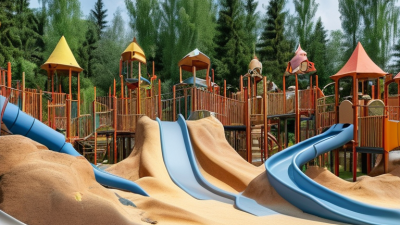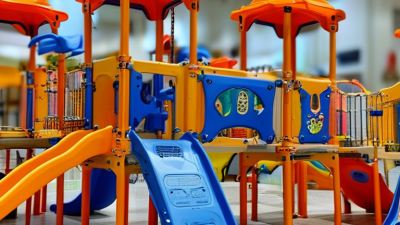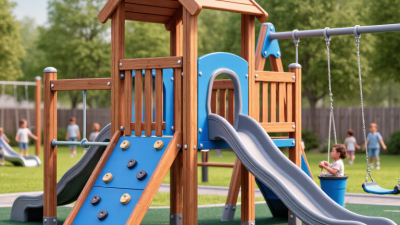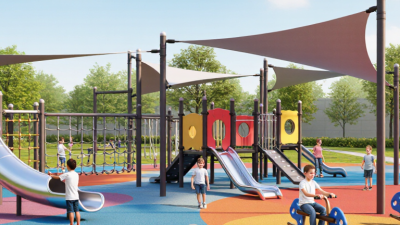
China has become a major sourcing base for backyard playground equipment. Its factories offer varied designs, flexible production, and competitive pricing. Yet global buyers need more than attractive catalogs. They need evidence of safe materials, stable manufacturing, and dependable communication.
Darell Hammond, founder of KaBOOM! and a respected play-sector expert, said, “Play is not a luxury; it is a necessity.” His statement reflects the real purpose behind every backyard playground. A slide, swing, or climbing wall should invite movement, imagination, and shared family time. It should also withstand weather, repeated use, and imperfect installation conditions. Small details matter. Rounded edges matter. Drainage matters. Clear assembly instructions matter.
This guide examines China’s leading backyard playground suppliers for international buyers. It considers product quality, customization, factory experience, inspection practices, packaging, and after-sales support. It also looks beyond promotional claims. A polished website proves little. A sample may not represent every production batch. Even experienced buyers can miss important questions.
The process is not flawless. Supplier selection still involves uncertainty. However, structured comparisons can reduce avoidable risks. Buyers should request material specifications, test documentation, production photographs, and references from comparable projects. They should confirm which safety requirements apply in the destination market. They should also review installation responsibilities before placing an order.
The strongest suppliers do more than manufacture equipment. They communicate clearly, document their processes, and respond when problems appear. That difference becomes visible after delivery. A reliable partner protects both the playground investment and the children who use it.
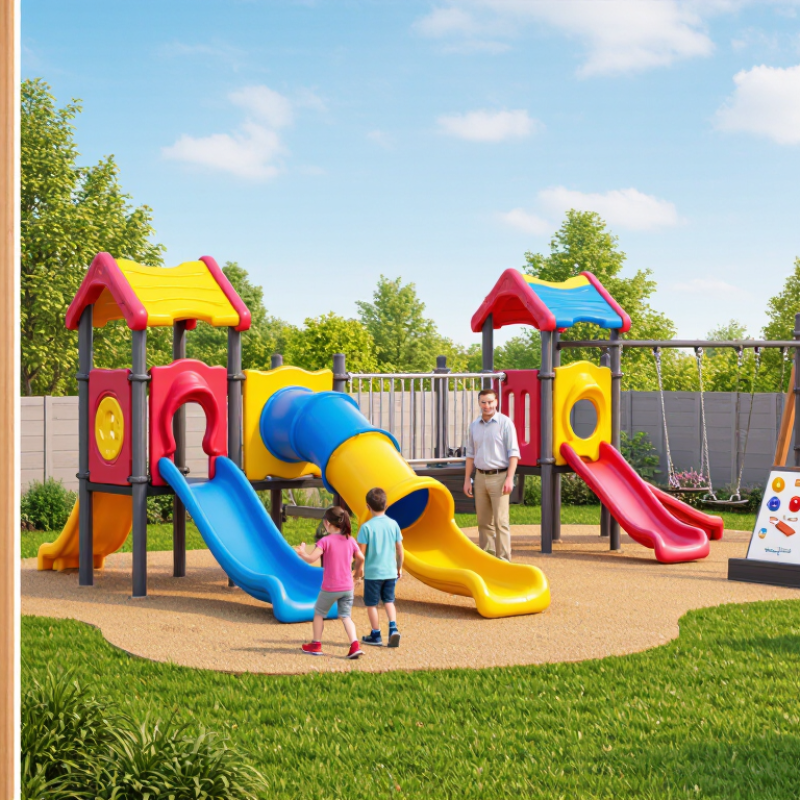
China’s backyard playground suppliers generally fall into four types: direct factories, trading companies, design-integrated manufacturers, and contract-production partners. Direct factories usually offer better price control and customization. Trading companies can combine slides, swings, climbing walls, and safety surfacing from different workshops. Design-integrated suppliers add layout drawings, 3D renderings, installation guidance, and project coordination. The difference matters.
Grand View Research estimated the global playground equipment market at about US$5.8 billion in 2023, with continued growth forecast through 2030. This demand supports China’s broad product categories. Buyers can source galvanized steel structures, rotomolded plastic panels, treated timber elements, rope nets, sensory play units, toddler systems, outdoor fitness equipment, and rubber or synthetic safety flooring. Inclusive designs are also receiving more attention, including transfer platforms and low-height activities.
A serious supplier should provide material specifications, load calculations, weld inspection records, and impact-attenuation test results. EN 1176 and ASTM F1487 are common reference standards, but certification claims require verification. TÜV Rheinland’s playground safety guidance emphasizes inspection, entrapment prevention, fall zones, and maintenance records. A low quotation may exclude anchoring, drainage, packaging reinforcement, or installation tools. That assumption can fail. Product photos are not enough. Buyers should request production samples, audit the coating thickness, and confirm replacement-part availability before approving a container shipment. I would also question unclear wood treatment claims. Safety paperwork can look complete while practical maintenance remains weak.
Choosing China’s backyard playground suppliers requires more than comparing prices. A real manufacturer should explain its production process clearly. Ask whether it controls metal cutting, welding, coating, assembly, and packaging. Request recent factory videos, production photographs, and quality records. A trading company may offer wider product choices, but it should disclose its partner factories honestly. Hidden sourcing can complicate inspections and warranty claims.
Review material specifications carefully. Confirm steel thickness, plastic type, surface treatment, load limits, and suitable age ranges. Ask for test reports from recognized independent laboratories. Check whether designs address sharp edges, finger entrapment, fall zones, anchoring, and weather exposure. A reliable supplier can provide installation drawings, spare-part plans, and clear responses about shipping damage. Video calls help, but they cannot replace an independent factory audit. I have seen attractive samples hide weak welds and uneven powder coating. Small details matter.
Tips: Compare the approved sample with mass-production photos. Place quality requirements inside the contract. Request a pre-shipment inspection before payment. Test communication speed and technical accuracy, not just politeness. A supplier that avoids detailed answers deserves caution. Also, leave room for mistakes in your planning. Local installation conditions, customs requirements, and safety rules may differ from the supplier’s assumptions. Ask a qualified local professional to review the final layout and installation method.
China Top Backyard Playground Suppliers for Global Buyers
Exporting backyard playgrounds requires more than attractive designs and competitive pricing. Suppliers should match each product with the destination market’s safety requirements. Common references include EN 1176, ASTM F1487, and applicable local standards. Requirements can differ by country, especially for fall height, protective surfacing, and component spacing. A qualified supplier should provide material records, load tests, inspection reports, and clear installation instructions.
Tips: Check every shipment, not only the first sample. Measure platform heights, guardrail openings, bolt coverage, and fall zones. Ask for evidence of impact-absorbing surfacing tests. Confirm that wood, plastic, paint, and metal parts meet chemical safety limits. Outdoor hardware should resist corrosion after exposure to rain, sunlight, and temperature changes. Small details matter.
A certificate is useful, but it is not the whole safety process. A neat document folder can still hide loose fasteners or poor drainage. Buyers should audit production consistency and inspect finished units before loading. Independent laboratory testing adds confidence, especially for large orders. Suppliers should also explain maintenance intervals, replacement parts, and installation risks. Some designs look safe but create finger entrapment points. That mistake is easy to miss. Rechecking the design with an experienced safety engineer is worthwhile.
| Destination Market | Primary Safety Reference | Typical Product Scope | Key Safety Requirements | Supplier Evidence to Request | Important Export Considerations |
|---|---|---|---|---|---|
| United States | ASTM F1148 for home playground equipment; applicable U.S. Consumer Product Safety Commission requirements and guidance | Residential swing sets, slides, climbing structures and combination backyard units | Entrapment prevention, stable anchoring, safe platforms, guarded openings, swing-clearance zones, impact-attenuating surfacing and durable hardware | Material specifications, structural test reports, installation instructions, warning labels, age grading and batch traceability records | Confirm whether the product is intended for residential or public use. Public playground installations generally require additional public-playground criteria and local authority review. |
| European Union and EEA | EN 71-8 for activity toys; EN 1176 and EN 1177 where public-playground equipment or playground surfacing requirements apply | Domestic activity toys, residential play towers and equipment supplied for playground environments | Mechanical and physical safety, fall-height assessment, impact attenuation, dangerous gaps, protrusions, accessibility and clear user instructions | Risk assessment, technical file, test reports, product labeling, assembly manual, maintenance instructions and applicable declaration of conformity | The applicable standard depends on intended use and product classification. Verify chemical, labeling and general product-safety obligations for the specific destination country. |
| United Kingdom | Relevant British Standards, including BS EN 71-8 for activity toys and BS EN 1176/1177 for public-playground applications | Backyard playhouses, climbing equipment, slides, swings and combination units | Structural stability, fall protection, entrapment control, safe access, impact protection, weather resistance and clear safety instructions | Product risk assessment, test documentation, labeling artwork, installation instructions and records identifying materials and production batches | Check the current product-safety and conformity-marking rules applicable to the sales channel and whether the equipment is classified as a toy or playground installation. |
| Canada | CAN/CSA-Z614 for children’s playground equipment and surfacing | Residential and public-use play structures, swings, slides and climbing equipment | Fall-zone dimensions, protective surfacing, impact attenuation, entrapment prevention, structural integrity and corrosion-resistant components | Design drawings, critical-dimension checklist, surfacing test data, installation manual, inspection schedule and maintenance instructions | Requirements may differ according to whether the product is intended for a private residence, childcare facility or public playground. |
| Australia and New Zealand | AS 4685 series for playground equipment and surfacing; applicable consumer-product requirements for residential products | Outdoor play units, swings, slides, climbing frames and playground accessories | Impact areas, fall heights, equipment stability, entrapment risks, accessible routes, surface performance and protection against corrosion and weathering | Engineering calculations, fall-height data, component specifications, installation and maintenance manuals, warning labels and test certificates | Use local requirements for the final installation site. Outdoor exposure, ultraviolet radiation, moisture and coastal corrosion should be included in the durability review. |
| Japan | Applicable Japanese product-safety requirements and relevant JIS standards for children’s products and playground equipment | Residential slides, swings, climbing equipment and compact outdoor play systems | Safe dimensions, structural strength, stability, protection from sharp edges and pinch points, age suitability and Japanese-language instructions | Japanese labeling review, translated manuals, material declarations, load test records, inspection procedures and traceability documentation | Confirm the importer’s labeling, translation and product-notification responsibilities before shipment. |
| All Export Markets | Destination-country law plus a recognized playground or residential-equipment safety standard | Wooden, metal or plastic backyard playground systems supplied as flat-pack or assembled units | No sharp edges, exposed threads or hazardous gaps; reliable anchoring; suitable load capacity; safe assembly sequence; protective coatings; clear fall-zone and maintenance guidance | Independent laboratory report, quality-control plan, pre-shipment inspection, packaging specification, spare-parts list and corrective-action records | A certificate alone does not replace destination-market compliance. Match the tested model, materials, dimensions and production version to the products actually shipped. |
China Top Backyard Playground Suppliers for Global Buyers
Sourcing backyard playground equipment should begin with a written project brief. Define the user age, available space, fall zones, climate, and installation surface. Grand View Research estimated the global playground equipment market at about USD 5.5 billion in 2022, with steady growth expected through 2030. This expansion brings more factories, but quality can vary sharply. Request company registration, production photos, material specifications, and recent test reports before discussing price. Ask for steel thickness, coating type, plastic composition, and maximum user capacity. Vague answers are warning signs.
Customization should follow safety, not decoration. Send a simple site drawing with exact measurements and drainage details. Then confirm slide height, platform access, guardrails, anchoring points, and maintenance access. The U.S. Consumer Product Safety Commission reports more than 200,000 playground-related injuries annually among children, showing why design verification matters. Require compliance evidence for relevant standards, such as ASTM F1487 or EN 1176, depending on the destination market. I have seen buyers approve attractive renderings too early. That decision often creates expensive revisions.
Tips: Compare at least three suppliers using the same specification sheet. Request a sample of powder coating and plastic color. Check whether spare bolts, caps, and replacement panels are available. Confirm packaging with corner protection and moisture control. Allow an independent pre-shipment inspection. Do not rely only on factory certificates; verify the issuing laboratory and report number. Small details matter. One overlooked drainage gap can shorten product life.
For global buyers, a backyard playground supplier must manage more than attractive designs. Shipping reliability matters. UNCTAD reports that over 80% of international trade by volume moves by sea, so buyers should confirm port routes, container dimensions, and weather protection. Request a complete packing list, including carton numbers, hardware, spare parts, and installation drawings. Small missing parts can delay an entire project.
Installation quality affects both safety and service costs. The U.S. Consumer Product Safety Commission reports about 200,000 annual emergency-department injuries involving playground equipment. Suppliers should provide clear assembly manuals, torque requirements, surface recommendations, and trained remote support. Compliance with standards such as ASTM F1487 or EN 1176 should be documented, not simply promised. After-sales support needs defined response times, replacement-part availability, and a written warranty. In practice, even careful suppliers make mistakes. A mislabeled bolt or unclear diagram can create avoidable rework.
Tips: Ask for pre-shipment photos and a video inspection. Confirm whether duties, unloading, and local installation are included. Keep one spare hardware kit onsite. Record serial numbers and installation dates. Check the surface after heavy rain, because drainage problems may appear later. A reliable supplier should review these details before production, not after a complaint. [Sources: UNCTAD, Review of Maritime Transport 2023; U.S. CPSC, Public Playground Safety Handbook.]
This chart shows commonly used planning ranges for China-made outdoor playground projects. Ocean transit figures represent port-to-port estimates, while production and installation periods are typical calendar-day ranges. Actual schedules depend on product customization, destination port, seasonal congestion, site conditions, and local regulations.