How to Choose Vinyl Playground Sets for Global Buyers?

Choosing vinyl playground sets for global buyers requires more than comparing colors, prices, and product photos. A safe, durable play area begins with clear questions about children’s ages, available space, climate, installation conditions, and expected daily use. Vinyl may resist moisture and simplify cleaning, but its performance depends on material quality, UV protection, surface design, and manufacturing consistency. A bright set can still fade, crack, or become uncomfortable when exposed to intense sunlight.

Experienced buyers usually examine the complete product, not just the main structure. Check wall thickness, rounded edges, fastener protection, platform stability, drainage points, and the texture under small hands. Ask suppliers for material specifications, load information, inspection records, installation instructions, and maintenance guidance. Independent testing can strengthen confidence, especially when products cross borders and local requirements differ. Certifications are useful evidence, but they should be verified rather than accepted at face value.

Details matter.

Shipping also affects the buying decision. Large panels need protective packaging, accurate dimensions, and practical unloading plans. A supplier who answers quickly but avoids technical questions may create problems later. However, even a careful checklist has limits. Factory samples may look better than a production batch, and online reviews may not reveal long-term wear. Buyers should request recent photographs, sample pieces, references, and a written quality agreement before ordering. The best vinyl playground sets balance child safety, weather resistance, maintainability, design appeal, and realistic ownership costs. Global purchasing is never completely risk-free, but careful evidence can make the decision more reliable.
How to Choose Vinyl Playground Sets for Global Buyers?

Define the Core Features and Uses of Vinyl Playground Sets

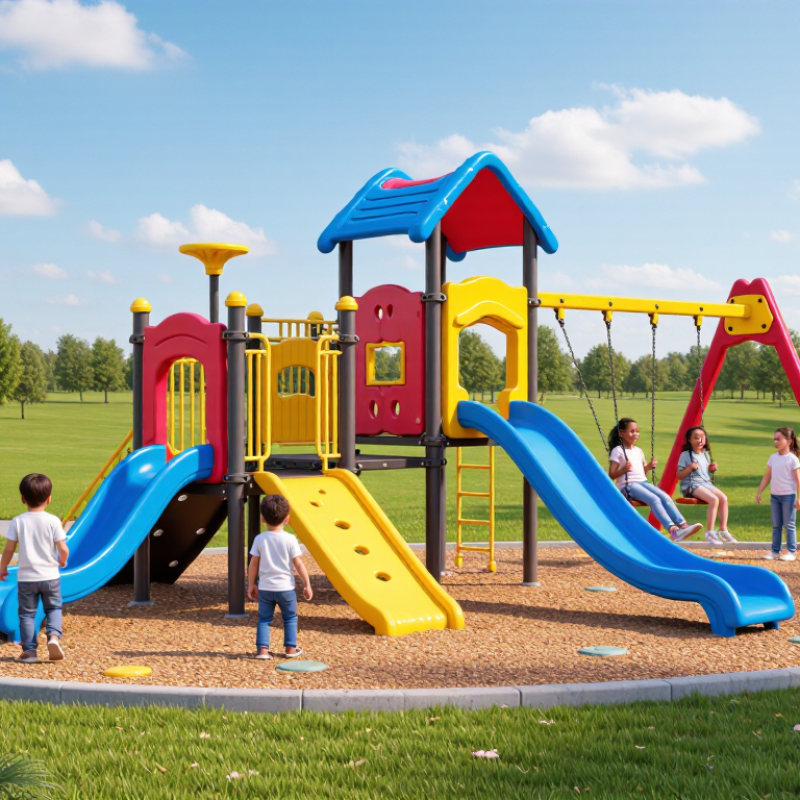
Vinyl playground sets combine bright surfaces, rounded forms, and flexible layouts for schools, parks, resorts, and residential communities. Their core feature is a smooth vinyl or vinyl-coated surface that resists splinters and feels comfortable under regular contact. Buyers should inspect seams, edges, fasteners, and drainage points before choosing a set. Small gaps can collect water, dust, or insects.

UV resistance matters in sunny regions, while cold flexibility matters in northern climates. A suitable set should include stable posts, secure handrails, impact-absorbing ground, and age-appropriate play areas. Slides need controlled speed and a clear exit zone. Climbing parts require strong grips and enough spacing between components. Accessibility also deserves attention, including transfer points and usable pathways. These details affect real use, not just product photographs.

For global purchasing, confirm material specifications, installation instructions, replacement-part availability, and applicable local safety requirements. Standards differ between countries, so one certificate may not answer every question. I have found that buyers often focus on color and price first. That approach is understandable, but it can hide maintenance problems. A pale surface may show less heat, while a dark surface can become uncomfortable under direct sun. Regular checks should look for fading, cracks, loose bolts, standing water, and damaged surfacing. Vinyl is practical, but it is not maintenance-free.

Assess Safety Standards, Materials, and Product Durability

How to Choose Vinyl Playground Sets for Global Buyers?

Safety should lead every vinyl playground purchase. The U.S. Consumer Product Safety Commission’s 2021 report recorded over 200,000 annual emergency-department injuries linked to playground equipment. Falls remain a major cause. Ask suppliers for testing against ASTM F1487 or EN 1176. Verify impact-attenuating surfacing under ASTM F1292 or EN 1177. Do not accept a general “safe” statement. Request test dates, laboratory names, product models, and load limits.

Vinyl-coated components need careful material checks. Look for UV stabilizers, rust-resistant frames, sealed edges, and smooth welds. Inspect samples after heat, cold, moisture, and repeated cleaning. The European Chemicals Agency has highlighted concerns around certain plastic additives, so request restricted-substance and migration testing for children’s products. A pleasant soft touch means little if the coating cracks after one winter. ASTM F1976 and relevant regional chemical requirements may help structure supplier questions, but local rules still differ. I have seen buyers focus on color and overlook drainage holes. That mistake becomes expensive.

Tips: Touch every edge. Measure fall zones. Check pinch points. Ask for spare panels and fasteners. Review maintenance instructions in the installation language. Examine independent reports, not only factory certificates. A report can still be incomplete. Recheck its scope, sample size, and test conditions. Vinyl may be durable, but sunlight, sand, and poor cleaning can shorten its service life. Plan quarterly inspections, especially around anchors, platforms, and slide connections.

How to Choose Vinyl Playground Sets for Global Buyers? - Assess Safety Standards, Materials, and Product Durability
Evaluation Dimension What Global Buyers Should Check Relevant Technical Reference or Test Recommended Acceptance Evidence Priority
Applicable safety standard Confirm that the set is evaluated against the standard required in the destination market and that the product category is covered by the test scope. Common references include ASTM F1487 for public-use playground equipment and EN 1176 for playground equipment and surfacing. Requirements vary by market and installation type. Current third-party test report identifying the exact model, configuration, intended age range, test methods, and production sample. Essential
Entrapment and entanglement Inspect openings, gaps, tunnels, ropes, slides, and moving connections for head, neck, finger, limb, and clothing entrapment risks. Use the applicable regional playground safety standard and its prescribed probes, dimensional limits, and clearance requirements. Dimensional drawings, safety-risk assessment, and independent inspection records for every major configuration. Essential
Fall protection Check platform heights, guardrails, handrails, barriers, impact zones, and the compatibility of the equipment with the planned safety surfacing. Impact attenuation is commonly assessed using standards such as ASTM F1292 or EN 1177, depending on the market and surfacing type. Critical fall-height specification, impact-attenuation test result, installation drawing, and required safety-zone dimensions. Essential
Vinyl and PVC material quality Verify the vinyl construction, coating or film thickness, reinforcement fabric, seam quality, plasticizer system, and resistance to cracking or delamination. Material specifications should identify PVC or other polymer composition, reinforcement type, and applicable chemical or physical test methods. Material datasheet, batch traceability, thickness or grammage records, seam-strength results, and declarations for restricted substances. High
Chemical safety Check for restricted substances that may be relevant to children’s products, including certain heavy metals, phthalates, and other regulated chemicals. Requirements differ by destination. Buyers may need to consider applicable rules such as EU REACH restrictions, the U.S. CPSIA, or local chemical-safety legislation. Recent laboratory chemical test report linked to the exact material formulation and production batch, not only a general supplier declaration. Essential
Weather and UV resistance Assess resistance to sunlight, rain, humidity, temperature changes, mold, and repeated outdoor use in the intended climate. Relevant testing may include accelerated UV exposure, colorfastness, tensile retention, seam integrity, and water-resistance testing. Accelerated-aging results, outdoor-use limitations, cleaning instructions, UV-resistant material specification, and warranty conditions. High
Mechanical durability Evaluate repeated loading, impact, abrasion, inflation or deflation cycles where applicable, fastener strength, anchor points, and resistance to vandalism or misuse. Use the applicable playground equipment standard together with product-specific load, fatigue, abrasion, and seam-strength tests. Load-test records, fatigue-cycle results, seam and attachment inspection data, maximum user weight, and maximum simultaneous-user limits. High
Fire performance Determine whether the vinyl, foam, fabric, or other components require flame-retardant performance in the destination market or venue. Fire requirements depend on the product type, installation environment, and local regulations; do not assume one fire classification applies globally. Material fire-test report issued to the applicable local or international method, plus clear limitations on indoor and outdoor use. Medium to High
Hygiene and cleanability Prefer smooth, sealed, non-porous surfaces with accessible seams and drainage points that reduce dirt and moisture accumulation. Review the manufacturer’s cleaning and disinfection procedure and confirm compatibility with the vinyl surface and printed graphics. Approved cleaning-agent list, sanitation instructions, drainage design details, and inspection procedure for damaged or contaminated surfaces. High
Installation and anchoring Confirm that the ground conditions, anchoring system, assembly sequence, fall zones, and maintenance access match the installation site. Installation should follow the applicable playground standard, engineering requirements, and local building or public-use regulations. Site-preparation guide, anchoring calculations or specifications, assembly drawings, torque requirements, and post-installation inspection checklist. Essential
Maintenance and service life Review inspection frequency, replaceable parts, repair methods, storage requirements, and criteria for removing damaged vinyl components from service. Use the product maintenance manual and the inspection practices required by the destination market or facility operator. Preventive-maintenance schedule, spare-parts list, repair kit instructions, inspection log template, and clearly stated service-life assumptions. High
Documentation and traceability Ensure that test reports, user instructions, warnings, labels, production records, and certificates refer to the same product version. Documentation should reflect the destination country’s language, labeling, warranty, and product-liability requirements. Model-specific technical file, batch or serial traceability, multilingual manuals, conformity documentation, and corrective-action process. Essential

Buyer note: Safety obligations depend on the product design, whether the equipment is for private or public use, the installation environment, and the destination country. Standards and legal requirements should be verified with a qualified local testing or compliance professional before purchase or installation.

Match Playground Designs to Climate, Space, and User Needs

How to Choose Vinyl Playground Sets for Global Buyers?

Climate should guide the material choice before appearance. Hot, sunny sites need UV-resistant vinyl, shaded roofs, and colors that resist fading. In humid regions, sealed joints and water-shedding surfaces help reduce mold risks. Cold climates deserve flexible materials that will not become brittle after repeated freezing. Coastal locations need corrosion-resistant fasteners because salt air quickly attacks weak metal parts.

Space also changes the safest design. Measure the usable area, not just the empty plot. Leave clear zones around slides, swings, and climbing sections. A compact set may suit an urban courtyard, while a wider layout may work better for a school yard. Check ground slope, drainage, shade, and access for maintenance vehicles. Small details matter.

User needs should shape the height, challenge level, and movement options. Younger children may need low platforms, broad steps, and easy-grip rails. Older users often benefit from climbing nets, balance elements, and varied routes. Include accessible paths where possible, with firm surfaces and enough turning space. During site reviews, I have seen attractive layouts fail because adults ignored supervision points. That mistake is easy to repeat. Review sightlines from benches and entrances before ordering. Ask for installation guidance, material specifications, and inspection recommendations. A color sample can look excellent indoors but appear harsh under direct sunlight. Test it outdoors when practical.

Compare Suppliers, Customization Options, and International Costs

Choosing vinyl playground sets for international projects requires more than comparing catalog prices. Request identical specifications from at least three suppliers, including vinyl thickness, frame material, UV resistance, hardware grade, and expected service life. Ask for recent factory photographs, product samples, inspection records, and customer references from similar climates. A reliable supplier should explain production tolerances clearly, not hide behind attractive renderings. Details matter.

Customization can include colors, platform heights, themed panels, ramps, shade structures, and layout changes. Send a measured site plan with ground photos and drainage information. Confirm which design changes require new tooling, engineering fees, or longer production time. Also ask whether replacement panels and fasteners remain available after installation. I once underestimated packaging volume on a playground order, and the freight difference was painful. Measure twice.

International cost comparisons should include more than the factory quotation. Calculate sample charges, export packing, inland transport, ocean or air freight, insurance, customs duties, port handling, local delivery, and installation. Clarify the shipping term, currency, payment schedule, and responsibility for damaged cartons. A lower unit price may become expensive after oversized crates and destination charges appear. Ask for a landed-cost estimate using your actual destination and shipment size. Obtain installation drawings and maintenance instructions before paying a deposit. Requirements differ by market, so have local professionals review safety documents and site conditions. Mistakes still happen. Allow a contingency budget.

Verify Shipping, Installation, Compliance, and After-Sales Support

How to Choose Vinyl Playground Sets for Global Buyers?

Shipping, installation, compliance, and after-sales support deserve equal attention. Vinyl surfaces may resist moisture, but long sea transport can still cause cracking, distortion, or faded colors. Ask for carton dimensions, loading photos, container plans, and protection against heat and pressure. Confirm whether duties, inland delivery, and unloading equipment are included. A low factory price can become expensive at the destination.

Installation must match the site, climate, and local safety rules. The U.S. Consumer Product Safety Commission reports about 200,000 playground injuries receive emergency treatment annually in the United States. That figure shows why anchoring, fall zones, impact-absorbing surfacing, and inspection records matter.

Request assembly drawings, torque guidance, foundation details, and installer training.

Check standards such as ASTM F1487 or EN 1176 with a qualified local professional. One certificate may not satisfy every market. This is easy to overlook.

Tips:

Before payment, test the support process. Send three practical questions and measure response time. Request spare vinyl panels, fasteners, touch-up materials, and a written warranty. Clarify who pays for replacement shipping. Ask for remote installation support and maintenance videos. Keep a photo record of every delivery carton. It helps when damage claims become unclear. A checklist reduces mistakes, but it cannot replace local inspection.