Choosing the right playset can transform an ordinary yard into a place for climbing, imagining, and active play. This guide explores the top 10 types of unique backyard playsets, from compact tower designs to nature-inspired adventure structures. Each option offers a different balance of movement, creativity, space, and visual appeal.
The discussion considers practical details that families often notice after installation. These include platform height, slide angles, swing clearance, ladder grip, shade, drainage, and access for adult supervision. A playset may look impressive online but feel crowded beside a patio or difficult to maintain after heavy rain. Small yards matter. So do growing children.
Safety remains central throughout the guide. Reliable recommendations should reflect manufacturer instructions, age ratings, fall zones, anchoring methods, and regular hardware checks. Materials also deserve attention, including treated wood, recycled plastic, metal components, and weather-resistant finishes. Experienced parents may value sturdy construction, while younger children may prefer imaginative features such as playhouses, bridges, climbing walls, or themed panels.
No single design suits every family. I may favor versatile structures, but a quieter reading nook could matter more to another household. Some layouts also promise more than they deliver when assembly instructions are unclear. That limitation deserves honest consideration. By comparing benefits, drawbacks, maintenance needs, and space requirements, this overview helps readers choose unique backyard playsets with greater confidence and realistic expectations.
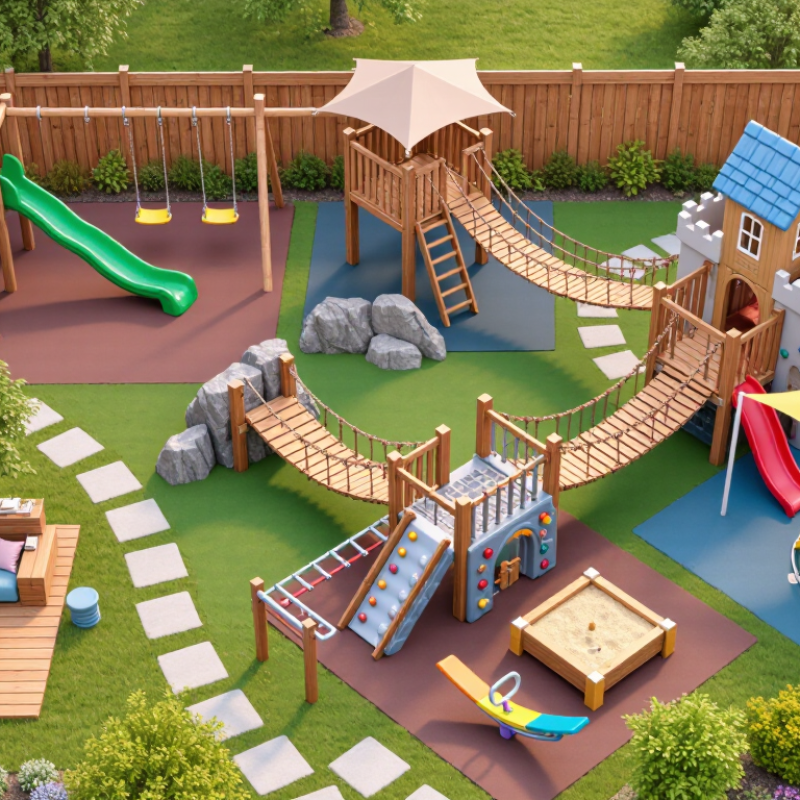
A unique backyard playset is not simply the tallest structure on the street. It combines a child’s interests, available space, developmental needs, and measurable safety features. Strong designs feel personal: a treehouse supports imaginative play, while a climbing wall develops strength. A rope course challenges balance. A sensory station suits younger children. Other distinctive choices include sand-and-water play, a nature fort, musical panels, inclusive platforms, compact urban sets, and adventure towers with slides. Variety helps, but novelty alone is not enough.
The World Health Organization’s 2020 guidelines recommend an average of 60 minutes of moderate-to-vigorous physical activity daily for children and teenagers. A well-planned playset can encourage that movement without feeling like exercise. Safety must shape the design. U.S. Consumer Product Safety Commission analysis of 2001–2008 injury data estimated about 205,000 playground injuries reached emergency departments annually. Falls were the leading cause. Guardrails, impact-absorbing surfaces, safe fall zones, and clear age guidance therefore define meaningful uniqueness.
In real backyards, visibility matters too. Adults should see every platform from common seating areas. Equipment should follow residential guidance such as ASTM F1148, with regular checks for loose bolts, splintered wood, and worn ropes. I would not call any checklist perfect. Children change quickly, and a once-appropriate height may soon become limiting. The best playset remains adaptable, repairable, and slightly humbler than its marketing description.
Treehouse and elevated adventure playsets turn an ordinary backyard into a small world of discovery. A raised platform can become a lookout tower, reading nook, or imaginary ship. Ladders, climbing walls, rope bridges, and enclosed slides add different challenges for growing children. Keep it low.
A strong design begins with stable posts, secure fasteners, and a level foundation. Guardrails should fully protect open edges, while gaps must not trap small heads or limbs. Use a deep, impact-absorbing surface beneath climbing areas. Grass alone is not enough. Local building requirements and the playset’s instructions should guide installation, especially for height and anchoring. Drainage also matters; standing water can weaken timber and create slippery steps.
In backyard planning, I have learned that excitement can hide practical problems. A narrow ladder may look adventurous but frustrate younger users. A wide platform may need extra bracing after heavy rain or strong wind. Inspect bolts, ropes, steps, and railings regularly. Look for splinters, rust, loose boards, and soft wood. Supervision remains important, even when the structure seems familiar. Weather changes everything. Shade can reduce hot surfaces, while careful placement keeps branches away from the roof. One imperfect choice deserves attention: building for today’s height may make the playset unsuitable next year. Adjustable accessories and generous standing space can support changing abilities without removing the sense of adventure.
Unique backyard playsets now combine climbing, swinging, and obstacle play in one compact outdoor space. A climbing playset might include a rope net, angled wall, or low bouldering panel. These features build grip strength, balance, and body awareness through active practice. Swinging adds rhythm and movement, while obstacle sections encourage children to plan each step. Keep it challenging, not confusing.
The U.S. Consumer Product Safety Commission estimated 155,400 playground-equipment injuries treated in emergency departments among children aged 14 or younger in 2021. Its Playground Equipment-Related Injuries report highlights falls as a major concern. For this reason, choose impact-absorbing surfacing and guardrails around elevated platforms. ASTM F1148 also provides safety specifications for home playground equipment. The standard is useful guidance, not a substitute for supervision.
A practical layout needs clear spacing between swings, climbing routes, and landing zones. Measure the yard before buying. A swing should not brush a fence, tree, or stone border. Check bolts, ropes, and wooden edges regularly, especially after rain. I prefer a lower climbing wall for younger children, with a taller route added later. That judgment can be wrong. Children develop differently. A playset with adjustable obstacles may support changing skills better than an impressive tower that soon feels too difficult. References: U.S. CPSC, Playground Equipment-Related Injuries Report, 2021; ASTM International, ASTM F1148.
Climbing, swinging, and obstacle-focused designs can be combined in many ways. This chart compares the number of distinct activity modes commonly associated with each playset type, including climbing, swinging, sliding, balancing, crawling, imaginative play, sensory play, and accessible play.
Activity-mode counts describe the defining play functions of each type rather than a specific product or brand. A higher value indicates a broader mix of physical or imaginative activities.
Imaginative pretend-play sets turn a backyard into a small world. Children can become shopkeepers, explorers, chefs, or forest rangers. A playhouse with a serving window supports pretend cafés and family role-play. A pirate-inspired structure may include a lookout deck, steering wheel, and hidden “treasure” box. A castle design invites storytelling with towers, flags, and a small bridge. Nature-themed sets can add log textures, animal panels, and a pretend campsite.
The best themed playset matches a child’s interests and physical abilities. Younger children may need low platforms, wide steps, and simple handles. Older children often enjoy climbing walls, rope features, or a lookout tower. Check that every opening is safely sized and that platforms have secure barriers. Place the structure on level ground with impact-absorbing surfacing. I have found that children use imaginative details longer when adults avoid directing every story. Still, a theme can feel limiting if it becomes too elaborate.
Tips: Choose one flexible theme rather than many fixed decorations. Add removable props, such as fabric maps, toy dishes, chalk signs, or cardboard animal tracks. Inspect bolts, handgrips, and wooden surfaces regularly. Keep water away from slippery access points. Shade matters more than many families expect. Watch the play area from a nearby seat, especially during climbing games.
A small mistake can teach us something. If children ignore a decorative feature, it may not deserve space. Observe their play for a week before adding more accessories. Their invented stories usually reveal what the playset still lacks.
| No. | Playset Type | Imaginative Theme | Typical Features | Suggested Age | Typical Footprint | Children at Once | Main Safety Consideration |
|---|---|---|---|---|---|---|---|
| 1 | Treehouse Village | Forest hideaway, lookout station, or woodland home | Elevated platform, climbing wall, ladder, slide, windows, and a lower play area | 5–12 years | 18 × 16 ft | 5–8 | Use impact-absorbing surfacing beneath elevated platforms and exits. |
| 2 | Pirate Ship Playset | Treasure hunts, ocean voyages, and pretend navigation | Ship-shaped deck, steering wheel, telescope, climbing net, flag, and slide | 5–12 years | 20 × 15 ft | 5–8 | Check climbing ropes, netting, and handholds regularly for wear. |
| 3 | Castle and Knight Fort | Medieval kingdom, royal court, or dragon adventure | Towers, bridge, playhouse, climbing ramp, lookout windows, and slide | 4–12 years | 19 × 17 ft | 5–7 | Keep guardrails and protective barriers secure around raised areas. |
| 4 | Fire Station and Rescue Center | Emergency response, rescue missions, and community helpers | Pretend control desk, fire-pole-style exit, bell, crawl-through area, and slide | 4–10 years | 16 × 14 ft | 4–6 | Use a controlled climbing exit and avoid enclosed spaces with limited visibility. |
| 5 | Outdoor Market and Café | Shopkeeping, cooking, role-play conversations, and neighborhood life | Service window, counter, chalkboard, bench, play kitchen, and sandbox area | 2–8 years | 12 × 10 ft | 3–5 | Sand areas should be covered when not in use and checked for debris. |
| 6 | Dinosaur Expedition Base | Fossil discovery, jungle exploration, and paleontologist missions | Low climbing mound, tunnel, observation deck, sensory panel, and slide | 3–10 years | 17 × 15 ft | 4–7 | Use rounded edges and stable climbing surfaces for younger explorers. |
| 7 | Space Station Playset | Astronaut training, moon missions, and space exploration | Rocket-style tower, steering controls, crawl tunnel, climbing wall, and slide | 5–12 years | 18 × 14 ft | 4–7 | Provide clear access routes and adequate clearance around the slide. |
| 8 | Farm and Barnyard Set | Farm work, animal care, gardening, and pretend markets | Barn-style playhouse, animal windows, fence panels, sandbox, and small slide | 2–8 years | 14 × 12 ft | 3–6 | Inspect gates and openings to prevent finger or head entrapment. |
| 9 | Fairy Garden and Enchanted Cottage | Fairy tales, magical gardens, and storybook characters | Small cottage, windows, sensory garden, stepping pods, bench, and low slide | 2–8 years | 13 × 11 ft | 3–5 | Choose non-toxic finishes and keep stepping elements firmly anchored. |
| 10 | Western Ranch and Train Station | Frontier travel, ticketing, train journeys, and cowboy adventures | Station platform, pretend ticket window, rail-themed panels, climbing deck, and slide | 3–10 years | 16 × 13 ft | 4–6 | Maintain clear zones between climbing areas, swings, and moving play equipment. |
Nature-based playsets turn ordinary yards into small adventure zones. A wooden treehouse encourages imaginative play above ground. A climbing wall builds grip and confidence. Log balance beams support coordination through simple movement. A sensory garden adds herbs, textures, and gentle discovery. A rope bridge creates challenge, but it needs secure anchors and regular inspections.
Natural materials should resist rot and splintering. Check every connection, especially after heavy rain.
Water playsets bring cooling excitement during warm afternoons. A sand-and-water table supports digging, pouring, and cooperative games. A shallow splash pad offers active play without deep water. A mud kitchen encourages creative outdoor cooking with safe, washable tools. Drainage matters. Standing water can create hygiene problems and slippery surfaces.
Adults should supervise closely, even when water looks harmless. Local weather and the child’s swimming ability also affect suitable choices.
Multi-activity designs combine movement, creativity, and rest. A tower with slides, climbing steps, and a lookout deck offers varied challenges. An obstacle-course set adds stepping pods, tunnels, and balance elements. A compact sports station can support throwing, kicking, and target games. A rotating activity panel adds puzzles, drawing, and sensory tasks.
In practice, more features are not always better. Crowded layouts can frustrate children and complicate supervision.
I once underestimated how much shade a playset needed. Now I would measure sun exposure, fall zones, and adult visibility before choosing equipment.