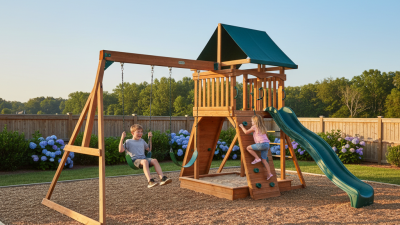
Choosing the right wooden swingsets for global buyers requires more than comparing prices and attractive photographs. A reliable decision begins with practical questions about wood species, construction quality, safety design, packaging, and supplier experience. Cedar, pine, and treated hardwoods perform differently in humid, dry, or cold climates. The choice matters.
A strong swingset should have smooth surfaces, rounded edges, stable joints, and secure ground anchors. Inspect the ladder spacing, swing-seat materials, rope strength, and protective coatings carefully. Ask suppliers for material specifications, load testing details, assembly instructions, and quality-control records. Independent inspections can reveal loose bolts, uneven drilling, or weak packaging before shipment. These small defects become expensive problems overseas.
Global purchasing also involves container dimensions, delivery schedules, replacement parts, and installation support. A compact design may reduce freight costs, but it can limit play space or structural strength. That trade-off deserves attention. Buyers should also confirm whether the product suits local safety expectations and installation conditions. Requirements vary by market, so broad promises are not enough. No buying guide can remove every uncertainty. However, transparent communication and documented testing can reduce avoidable risks. Experienced importers often request product samples, review factory photographs, and test one assembled unit before placing larger orders. This process takes time. It can protect children, budgets, and brand reputation. The best wooden swingsets combine safe play, durable materials, dependable manufacturing, and practical global logistics. When these elements align, buyers gain more than a playground product; they gain confidence in a long-term supply partnership.
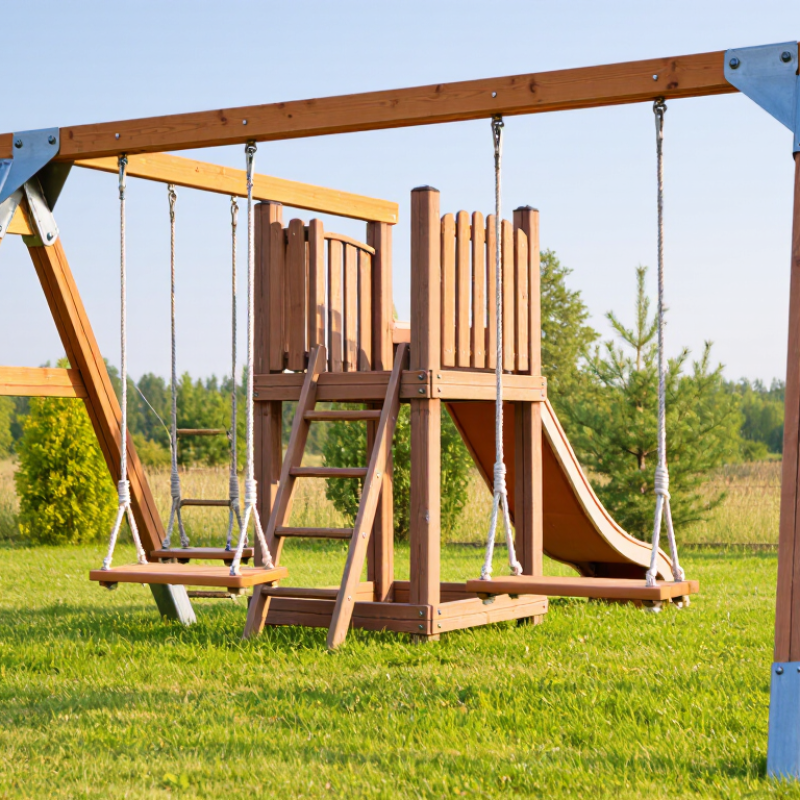
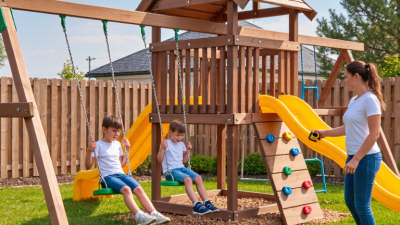
For global buyers, wooden swingsets should be classified by intended use, not appearance. A compact backyard set usually serves two to four children. It may include one swing beam, a short slide, and a small climbing wall. This design suits supervised family play. Larger school or community units need wider platforms, multiple exits, and stronger impact protection. They also require clearer age separation.
The U.S. Consumer Product Safety Commission cites about 200,000 emergency-department-treated playground injuries annually in older national estimates. This figure is not a product score. It shows why buyer assumptions matter. Toddler swingsets need low platforms, enclosed access, and supportive bucket seats. Equipment for older children can use belt seats, higher decks, and more challenging climbing routes. ASTM F1148 generally guides home playground equipment, while EN 1176 addresses public playground safety. Local requirements may still differ.
Wood selection also depends on climate and maintenance habits. Moist regions need effective drainage, sealed end grain, and regular surface checks. Dry climates may create cracks around bolts and joints. WHO reports that falls cause about 684,000 fatal injuries worldwide each year, although this data covers all settings. Impact-absorbing surfacing remains essential. Ask for load testing, assembly instructions, timber treatment details, and inspection records. A low price can look attractive. It may hide maintenance costs. I would not choose a swingset from photos alone; real installation space, user age, and supervision plans deserve equal attention.
How to Choose the Best Wooden Swingsets for Global Buyers?
Wood quality determines how a swingset performs after years outdoors. Look for pressure-treated or naturally durable timber with documented moisture control. The boards should feel solid, not soft, cracked, or excessively resinous. Inspect end grains, bolt holes, and cut edges carefully. These areas often absorb water first. Cedar, larch, and treated pine can all work well, but quality varies by supplier. A timber certificate helps, although paperwork alone cannot reveal every hidden defect.
Safety standards deserve equal attention. Ask for test reports covering structural strength, entrapment risks, fall zones, and surface finishes. Requirements differ between markets, so buyers should check applicable standards such as EN 71-8 or ASTM F1148. Do not assume one certificate satisfies every country. Guardrails should resist climbing pressure, while swing seats need flexible, impact-aware materials. Keep adequate clearance around moving parts. Small gaps matter.
Construction quality is visible in the details. Galvanized or corrosion-resistant fasteners suit wet environments better than ordinary steel. Posts should stand on stable foundations, and joints should remain tight after repeated movement. Request assembly instructions with torque guidance and maintenance intervals. I would still inspect the set after delivery. Transport can loosen hardware or damage coatings. Some designs look attractive but use thin braces. That is easy to miss. A sensible buyer balances appearance with load testing, repair access, and realistic outdoor exposure. Test it carefully.
| Evaluation Dimension | Recommended Benchmark | Why It Matters | How Buyers Can Verify It | Global Buying Guidance |
|---|---|---|---|---|
| Wood species | Use naturally durable or properly treated outdoor-grade timber, such as cedar, redwood, or treated pine. | Outdoor wood is exposed to rain, ultraviolet radiation, insects, and repeated wet-dry cycles. | Request the exact species, treatment type, treatment documentation, and intended outdoor-use classification. | Choose wood suitable for the destination climate rather than relying only on appearance or color. |
| Moisture content | Kiln-dried components should typically be supplied at approximately 12–18% moisture content at installation. | Excess moisture increases the risk of shrinkage, warping, fungal growth, and loose joints. | Use a calibrated moisture meter on representative structural pieces before assembly. | Allow acclimatization when shipping timber between significantly different climates. |
| Structural timber size | Main posts and beams should be engineered for the intended span, user load, swing forces, and local ground conditions. | Swinging creates dynamic and lateral loads that are higher than a person's static body weight. | Review engineering calculations, load assumptions, connection details, and test reports. | Do not compare products by timber thickness alone; joint design and anchoring are equally important. |
| Surface finish | All accessible surfaces should be smooth, free from splinters, and protected with an outdoor-rated coating where appropriate. | Rough edges and raised grain can cause cuts, splinters, or clothing snags. | Inspect edges, corners, drilled holes, end grain, and areas around handholds and seats. | Confirm that coatings are suitable for children's products and the destination market. |
| Rot and insect protection | Use naturally durable timber or preservative treatment appropriate for above-ground outdoor exposure. | Rot commonly begins at end grain, cracks, joints, and areas that retain water. | Check treatment records, preservative chemistry, retention information, and end-grain sealing instructions. | Verify that the treatment is permitted in the importing country and appropriate for children's outdoor equipment. |
| Fasteners and hardware | Use corrosion-resistant fasteners, typically hot-dip galvanized or stainless steel, with concealed or protected sharp ends. | Corroded hardware can weaken joints and create sharp projections. | Check material grade, coating specification, washer use, bolt locking method, and exposed thread protection. | Use higher corrosion resistance for coastal, tropical, or high-humidity environments. |
| Anchoring and stability | The frame should be permanently anchored according to the installation instructions and local soil conditions. | Tipping and overturning are major hazards during swinging and climbing. | Confirm anchor type, embedment depth, concrete requirements, drainage details, and installation drawings. | A surface-mounted anchor may be unsuitable for loose soil, steep ground, or severe wind exposure. |
| Applicable safety standard | For household equipment, evaluate against the requirements relevant to the destination market, such as EN 71-8, ASTM F1148, or ISO 8124-4. | These standards address hazards related to activity toys, including swings, slides, entrapment, stability, and construction. | Request a current third-party test report identifying the exact model, test scope, standard edition, and laboratory. | A general certificate is not enough if it does not identify the supplied product and applicable standard. |
| Fall protection | Install impact-attenuating surfacing suitable for the equipment's fall height and extend it through the recommended use zones. | Grass, soil, concrete, and asphalt do not provide reliable impact protection. | Request critical fall height data and verify the installed depth and maintenance requirements of the surfacing. | Loose-fill materials require regular leveling and replenishment; unitary surfaces require professional installation. |
| Swing clearance | Provide adequate front, rear, side, and overhead clearance based on the swing geometry and applicable standard. | Insufficient clearance increases collision risk with walls, fences, trees, and other play components. | Measure the installed use zone and compare it with the product instructions and local safety requirements. | For many residential swing layouts, the front and rear use zones are planned at roughly twice the pivot height, subject to the applicable standard. |
| Entrapment prevention | Avoid openings, gaps, ropes, and hardware configurations that can trap a child's head, neck, fingers, or clothing. | Entrapment can cause serious injury even when the overall structure appears stable. | Request an entrapment assessment and inspect openings around platforms, ladders, guardrails, and moving parts. | Do not modify the structure after purchase without reassessing the resulting gaps and projections. |
| Ropes, chains, and seats | Use durable, weather-resistant components with secure connections, pinch-point protection, and age-appropriate seats. | Moving components experience wear, abrasion, corrosion, and repeated impact. | Check working-load information, connection strength, wear points, chain guards, and replacement-part availability. | Confirm that replacement hardware can be sourced locally or shipped internationally. |
| Climate suitability | Match timber, coating, fasteners, and drainage design to the destination's humidity, rainfall, ultraviolet exposure, frost, and wind. | The same construction may perform differently in coastal, tropical, arid, or freezing climates. | Review environmental limits, maintenance intervals, wind guidance, and warranty exclusions. | Prioritize drainage, ventilation, corrosion resistance, and UV-resistant coatings for demanding climates. |
| Installation and maintenance | Provide clear multilingual instructions, a complete hardware list, inspection procedures, and scheduled maintenance guidance. | Correct assembly and routine inspection directly affect stability and service life. | Check assembly steps, torque specifications, inspection frequency, spare parts, and customer support arrangements. | Select products with replaceable wear parts and documented seasonal inspection requirements. |
Note: Safety requirements vary by country and product category. Buyers should confirm the latest applicable regulations, standard editions, installation rules, and local building requirements before purchase.
A suitable swingset begins with the buyer’s available outdoor space, not the product catalogue. Measure twice. Urban homes often need compact frames with one swing, a short slide, and limited climbing height. Larger suburban markets may accept three-seat designs, climbing walls, and wider play zones. Leave enough clearance around every moving part. I once underestimated side clearance during a site visit. That mistake taught me to check the full swing arc, not just the frame width.
Climate changes the right material and maintenance plan. Humid or tropical markets need rounded timber, sealed end grains, drainage gaps, and corrosion-resistant hardware. Dry regions may require stronger protective coatings and regular moisture checks. In areas with intense sunlight, shaded platforms and UV-resistant finishes can improve comfort. Cold markets need stable joinery because repeated freezing and thawing can loosen connections. These details sound small. They are not.
Buyer expectations also vary by age, household size, and installation skills. Families with younger children may prefer low platforms, enclosed steps, and gentle slides. Older children often need greater challenge, but height should remain manageable for supervision. Reliable suppliers should provide load guidance, assembly instructions, maintenance schedules, and inspection records. Test documentation matters more than attractive photographs. Some buyers may still choose oversized sets for future use. I understand that choice, but unused features can increase cost, maintenance, and installation risk. Keep it practical.
Choosing the best wooden swingset starts with comparing suppliers, not catalog pictures. Ask for kiln-drying records, timber species, load tests, and treatment certificates. The U.S. Consumer Product Safety Commission reports that falls cause about 79% of playground equipment injuries. Therefore, supplier quality affects real safety, not just appearance. Request installation drawings, hardware specifications, warranty terms, and replacement-part availability before discussing volume discounts.
Customization can improve fit, but every change adds risk and cost. A taller platform may require deeper foundations and thicker posts. A rope bridge, slide, or roof can also increase packaging volume. Ask suppliers to quote the same design in three versions: standard, adapted, and fully custom. Include sample approval, prototype charges, tooling, testing, inland transport, ocean freight, insurance, duties, installation, and spare parts. The World Bank’s 2023 Logistics Performance Index compares logistics quality across 139 economies, reminding buyers that delivery reliability varies greatly by country. Cheap factory pricing can become expensive at the port.
Build a landed-cost spreadsheet per unit. Add a five-to-ten percent contingency for currency changes, damaged parts, and local installation surprises. My first purchasing estimate once ignored replacement hardware; that mistake made the cheapest offer less attractive. Do not compare only the wooden frame price. Compare service life, maintenance intervals, packaging strength, and documentation quality. A 2024 global playground equipment market analysis projects continued market growth, but market expansion does not guarantee consistent supplier performance. One missing certificate can delay an entire shipment.
Comparison of typical landed costs, customization flexibility, minimum order quantities, and lead times by supplier region.
Benchmark estimates are shown in USD per standard commercial wooden swingset. Landed cost includes the product, international freight, estimated import duties, and delivery handling. Customization scores use a 1–5 scale, where 5 indicates the widest range of design, color, hardware, and packaging options. Actual costs vary by order volume, destination, certifications, and shipping terms.
How to Choose the Best Wooden Swingsets for Global Buyers?
Shipping begins before the order leaves the factory. UNCTAD’s Review of Maritime Transport 2024 states that over 80% of global merchandise trade moves by sea. Therefore, buyers should request moisture-resistant packaging, pallet dimensions, gross weight, and container loading plans. Each timber part needs clear labels. Hardware should sit in sealed, numbered bags. A missing bolt can delay installation for days.
Installation quality directly affects safety and service costs. The U.S. Consumer Product Safety Commission reports about 200,000 playground injuries annually treated in emergency departments. Choose swingsets with illustrated manuals, hardware maps, anchor details, and local-language warnings. The design should reference relevant standards, such as ASTM F1148 or EN 1176, where applicable. Independent inspection records add credibility. Still, paperwork is not installation. Uneven ground, poor anchoring, and rushed assembly remain common failures.
Maintenance planning must continue after delivery. Ask for a recommended inspection schedule, wood-treatment guidance, replacement-part codes, and response times. Keep spare seats, ropes, bolts, and caps available in regional warehouses when possible. A practical after-sales agreement should define photo-based fault reporting and technical support channels. The CPSC’s playground safety guidance emphasizes regular inspection and maintenance. Buyers should record cracks, loose joints, splinters, and drainage problems. One weakness deserves honesty: beautiful wood may require more care than expected in humid climates. A cheaper unit can become expensive when support is vague.